The concept of purchasing, central to commerce and human exchange, involves the obtaining of goods and services through transactional interaction. Authors such as Jane Eayre Fryer highlight its ethical aspects, promoting fairness in evaluation and worth, while Orison Swett Marden criticizes the habitual tendency to seek out bargains, connecting it to financial caution. William Henry Hudson examines the ceremonial nature of acquiring items, pointing out how buyers examine products before making a decision.
These differing viewpoints, ranging from practical guidance to cultural examination, portray purchasing as both a need and a social activity, deeply connected to themes of cost, market forces, and economic interaction. The relationship between buying and selling, as observed by Roland P. Falkner, illustrates its function in determining value for both physical and non-physical assets, mirroring larger economic concepts.
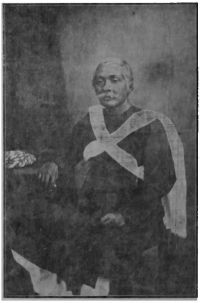 Peary Chand Mitra,
The Spoilt Child
(1893)
Peary Chand Mitra,
The Spoilt Child
(1893)