Summary

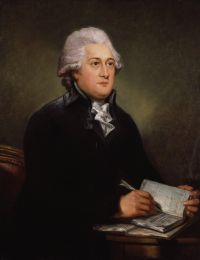
Portrait of Thomas Clarkson Thomas Clarkson A Portraiture of Quakerism, Volume 3

Let us not think, to the disgrace of our religion, that the human heart, under its influence, should be so retrogade, that the expected blessing of universal peace should be thought no improvement in our moral condition, or that our feelings under its influence should continue so impure, that, when it arrives, we should regard it not so much a blessing, as a cures. But let us, on the other hand, hope and believe, that, as an opposite and purer policy is acted upon, it will do good to our own natures, good to the peace and happiness of the world, and honour to the religion of the Gospel.
Source: Gutenberg

Portrait of Thomas Clarkson Thomas Clarkson A Portraiture of Quakerism, Volume 3

All education should have two objects in view, the opening of the understanding and the improvement of the heart. Of the two, the latter is most important. There cannot be a question, whether the person of the most desirable character be the virtuous or the learned man. Without virtue knowledge loses half its value. Wisdom, without virtue, may be said to be merely political; and such wisdom, whenever it belongs to a man, is little better than the cunning or craftiness of a fox. A man of a cultivated mind, without an unshaken love of virtue, is but a dwarf of a man.
Source: Gutenberg

Portrait of Thomas Clarkson Thomas Clarkson A Portraiture of Quakerism, Volume 3

Who can be less than a man in the Quaker society, when the rich and poor have an equal voice in the exercise of its discipline, and when they fill equally the important offices that belong to it? And who is there out of the society, whom the Quakers esteem more than human? They bow their knees or, their bodies, as I have before noticed, to no man. They flatter no man on account of his riches or his station. They pay homage to no man on account of his rank or title.
Source: Gutenberg

Get perspective with Kwize: daily news enlightened by great literature