Summary

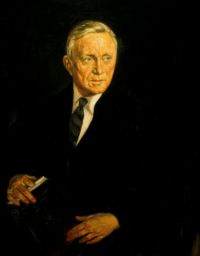
Portrait of William O. Douglas William O. Douglas United States v. Griffith — Opinion of the Court

It follows a fortiori that the use of monopoly power, however lawfully acquired, to foreclose competition, to gain a competitive advantage, or to destroy a competitor, is unlawful.
A man with a monopoly of theatres in any one town commands the entrance for all films into that area. If he uses that strategic position to acquire exclusive privileges in a city where he has competitors, he is employing his monopoly power as a trade weapon against his competitors. It may be a feeble, ineffective weapon where he has only one closed or monopoly town.
Source: Wikisource

Portrait of William O. Douglas William O. Douglas United States v. Griffith — Opinion of the Court

And so, even if we accept the District Court's findings that appellees had no intent or purpose unreasonably to restrain trade or to monopolize, we are left with the question whether a necessary and direct result of the master agreements was the restraining or monopolizing of trade within the meaning of the Sherman Act.
Anyone who owns and operates the single theatre in a town, or who acquires the exclusive right to exhibit a film, has a monopoly in the popular sense.
Source: Wikisource

Portrait of William O. Douglas William O. Douglas United States v. Griffith — Opinion of the Court

To be more specific, the defendants in the former case through the pooling of their buying power increased their leverage over their competitive situations by insisting that they be given monopoly rights in towns where they had competition, else they would give a distributor no business in their closed towns.
It is, however, not always necessary to find a specific intent to restrain trade or to build a monopoly in order to find that the anti-trust laws have been violated.
Source: Wikisource

Get perspective with Kwize: daily news enlightened by great literature