Summary

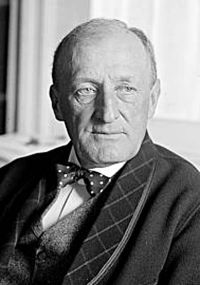
Portrait of James Clark McReynolds James Clark McReynolds Paramount Famous Lasky Corporation v…

The record discloses that ten competitors in interstate commerce, controlling 60 per cent. of the entire film business, have agreed to restrict their liberty of action by refusing to contract for display of pictures except upon a standard form, which provides for compulsory joint action by them in respect of dealings with one who fails to observe such a contract with any distributor, all with the manifest purpose to coerce the exhibitor and limit the freedom of trade.
Source: Wikisource

Portrait of James Clark McReynolds James Clark McReynolds Paramount Famous Lasky Corporation v…

The standard exhibition contract and rules of arbitration, dated May 1, 1928, having been evolved after six years of discussion and experimentation, are reasonable and normal regulations; so that whatever restraint follows falls short of unlawful coercion. (2) Arbitration is well adapted to the needs of the motion picture industry. (3) The manner in which the contract and rules have worked out in practice, and the significant absence of complaints, reflect their reasonable character. (4) The decree is inconsistent with the stipulated facts, also with the court's findings of fact.
Source: Wikisource

Portrait of James Clark McReynolds James Clark McReynolds Paramount Famous Lasky Corporation v…

In order to establish violation of the Sherman Anti-Trust Act, it is not necessary to show that the challenged arrangement suppresses all competition between the parties or that the parties themselves are discontented with the arrangement. The interest of the public in the preservation of competition is the primary consideration. The prohibitions of the statute cannot 'be evaded by good motives.
Source: Wikisource

Get perspective with Kwize: daily news enlightened by great literature