Summary

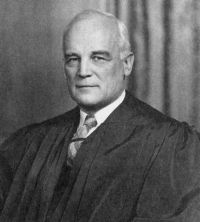
Portrait of Harold Hitz Burton Harold Hitz Burton Ferguson v. Lines — Concurrence

For my part, to overturn the judgments below simply involves second-guessing the Missouri Supreme Court, the Court of Appeals for the Seventh Circuit, and the Court of Appeals for the Second Circuit, on questions of fact on which they brought to bear judgments neither capricious nor unreasonable, and on which they made 'fair assessment of a record.'
I dissent also for another reason. No scientific or precise yardstick can be devised to test the sufficiency of the evidence in a negligence case. The problem has always been one of judgment, to be applied in view of the purposes of the statute.
Source: Wikisource

Portrait of Harold Hitz Burton Harold Hitz Burton Ferguson v. Lines — Concurrence

If in such situations it becomes the duty of one Justice among the disagreeing five not to 'forego' his right to dissent, then I do not see why it is not equally the duty of the remaining four, resulting in the 'rule of four' being set at naught. I thus see no basis in the circumstance that a case is an 'individual' one rather than one of a 'class' for distinctions in what may be done by an individual Justice who disapproves of the Court's action in granting certiorari.
Source: Wikisource

Portrait of Harold Hitz Burton Harold Hitz Burton Ferguson v. Lines — Concurrence

I do not think that, in the absence of the considerations mentioned, voting to dismiss a writ after it has been granted can be justified on the basis of an inherent right of dissent. In the case of a petition for certiorari that right, it seems to me-again without the presence of intervening factors-is exhausted once the petition has been granted and the cause set for argument. [1] Otherwise the 'rule of four' surely becomes a meaningless thing in more than one respect.
Source: Wikisource

Get perspective with Kwize: daily news enlightened by great literature