 Samuel Taylor Coleridge,
Confessions of an Inquiring Spirit and Some Miscellaneous Pieces
Samuel Taylor Coleridge,
Confessions of an Inquiring Spirit and Some Miscellaneous Pieces
“ It sounds like stories from the land of spirits, If any man obtain that which he merits, Or any merit that which he obtains. ”
The concept of "merits" refers to the inherent value or significance of an action, quality, or accomplishment, typically assessed in relation to deserved reward or acknowledgment. Authors have examined this theme from various angles: Chesterfield associated merit with social advancement, underscoring its connection to favor; Coleridge reflected on its moral dimensions in human matters; Saintsbury examined it within literary settings, emphasizing descriptive and creative skill.
Legal writings, such as those by Kennedy, situated merits within judicial contexts, differentiating them from procedural rights. These viewpoints together illustrate merits as a complex notion, spanning ethical, artistic, and institutional assessments.
Samuel Taylor Coleridge,
Confessions of an Inquiring Spirit and Some Miscellaneous Pieces
“ It sounds like stories from the land of spirits, If any man obtain that which he merits, Or any merit that which he obtains. ”
 Heber C. Kimball,
Journal of Discourses — Volume 10…
Heber C. Kimball,
Journal of Discourses — Volume 10…
“ When the kingdom triumphs, every man will be rewarded according to his works, and will receive that which is designed for him, and in all things be blessed according to his merits. By merit I mean that which a man earns, and you will see the day when you will get nothing but what you earn by your works and your integrity to God and your brethren. ”
 George Saintsbury,
A Short History of French Literature
George Saintsbury,
A Short History of French Literature
“ His merits are an almost incomparable power of description, a mastery of those types of character which he attempts, an imagination of extraordinary power, and a singular satirical criticism of life, which does not exclude the possession of a vein of romantic and almost poetical sentiment and suggestion. ”
 Hugo Münsterberg,
The Photoplay: A Psychological Study
Hugo Münsterberg,
The Photoplay: A Psychological Study
“ We have no right to conclude from this that only the merits and excellences are the true causes of their success. A caustic critic would probably suggest that just the opposite traits are responsible. ”
Joseph Woods, Letters of an Architect, From France…
“ Their merits perhaps may consist in particulars to which he is less sensible than many other people, and he may think such particulars more highly valued than they deserve, and he may possibly be right in so thinking ”
 Anthony Kennedy,
Asarco Incorporated v. Kadish…
Anthony Kennedy,
Asarco Incorporated v. Kadish…
“ We are not unmindful of the paradox that would result if respondents (plaintiffs below) prevail on the merits, for then they will have succeeded in obtaining a federal determination here that would have been unavailable if the action had been filed initially in federal court. Nonetheless, although federal standing "often turns on the nature and source of the claim asserted," it "in no way depends on the merits of the [claim] ." ”
Earl of Philip Dormer Stanhope Chesterfield, Letters to His Son, 1748
“ Among men, how often have I seen the most solid merit and knowledge neglected, unwelcome, or even rejected, for want of them! While flimsy parts, little knowledge, and less merit, introduced by the Graces, have been received, cherished, and admired. Even virtue, which is moral beauty, wants some of its charms if unaccompanied by them. ”
 Jonathan Swift,
The Prose Works of Jonathan Swift…
Jonathan Swift,
The Prose Works of Jonathan Swift…
“ By merit I here understand that value which every man puts upon his own deservings from the public. And I believe there could not be a more difficult employment found out, than that of paymaster general to this sort of merit; or a more noisy, crowded place, than a court of judicature, erected to settle and adjust every man's claim upon that article. I imagine, if this had fallen into the fancy of the ancient poets, they would have dressed it up after their manner into an agreeable fiction, and given us a genealogy and description of merit, perhaps not very different from that which follows. ”
Earl of Philip Dormer Stanhope Chesterfield, Letters to His Son, 1752
“ To form that character advantageously, you have three objects particularly to attend to: your character as a man of morality, truth, and honor; your knowledge in the objects of your destination, as a man of business; and your engaging and insinuating address, air and manners, as a courtier; the sure and only steps to favor.Merit at courts, without favor, will do little or nothing; favor, without merit, will do a good deal; but favor and merit together will do everything. ”
 William Shakespeare,
King Lear
(1917)
William Shakespeare,
King Lear
(1917)
“ Where nature doth with merit challenge. 'Where inherent goodness vies with moral growth,' i.e., virtue developed by training. If, on the other hand, challenge means demand, then with merit would be an adverbial phrase qualifying challenge, and the whole expression would mean 'Where inherent goodness deservedly demands our largest bounty.' I prefer the former interpretation. ”
Robert H. Milligan, The jungle folk of Africa (1908)
“ Your virtues, and the graces of mind and character upon which you pride yourself—your strength and composure, your patience and devotion to duty, your honesty, your justice, your purity—all these belong not only to yourself but to the society which has produced you and of which you are a part. ”
 L. H. Sigourney,
Olive Leaves; Or, Sketches of Character
L. H. Sigourney,
Olive Leaves; Or, Sketches of Character
“ Examples of true greatness, generosity, and piety, if less frequent than those of an opposite nature, borrow force from contrast, and may therefore make a deeper impression, and awaken a stronger desire of imitation.The entertainments of history aid in acquiring a knowledge of human nature. We there see what man has been from the beginning, and what motives or temptations have moved him to good or to evil. Great care should be taken to form a correct judgment, and to measure by a true standard of excellence those whom the world has called illustrious. ”
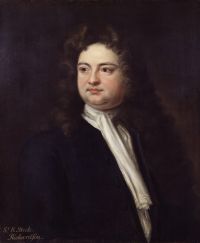 Sir Richard Steele,
Richard Steele
Sir Richard Steele,
Richard Steele
“ Y. Book. 'Tis true, madam, I owe it all to fortune; neither your kindness nor my industry had any share in't. Thus am I still as wretched as I was, for this happiness I so much prize had doubtless been refused my want of merit.Pen. It has very soon, you see, lost what you valued in it; but I find you and I, sir, have a different sense; for, in my opinion, we enjoy with most pleasure what we attain with least merit. Merit is a claim, and may pretend justly to favour; when without it what's conferred is more unexpected, and therefore more pleasing. ”
“ For I think, verily, that there are degrees of merit in subjects—in spite of the fact that to treat even one of the most ambiguous with due decency we must for the time, for the feverish and prejudiced hour, at least figure its merit and its dignity as possibly absolute. ”
Various, Chambers's Edinburgh Journal, No…
“ What merit have I shewn—by what good intention towards the world have I been animated—what has been the positive amount of those services of mine on which I found my pretensions to the world's rewards? ”
Various, The Knickerbocker, Vol. 22, No…
“ Do you call the notion of excellence strange? You will next say that virtue itself is an 'Idola!' But I tell you, there is a reality in both; I know it, for I can feel it. Nobility, virtue, respect, and happiness, are not empty names. ”
William Richard Wood Stephens, Dictionary of National Biography… (1885)
“ Starting from the contemplation of sensible objects, he propounds the question whether the goodness in all good things, although known by different names, such as justice in a man, strength or swiftness in a horse, and so on, comes from one source or divers. All varieties of excellence, by whatever name they may be called, are resolvable at last into a few simple elements—the good, the beautiful, the great, the useful. ”
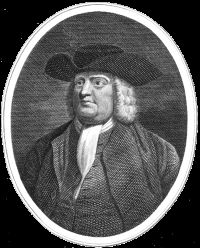 William Penn,
No cross, no crown
William Penn,
No cross, no crown
“ But honour, which is esteem and regard, that thou owest to all men; and if all, then thy inferiors. But why for all men? Because they are the creation of God, and the most noble part of his creation too: they are also thy own kind: be natural, and assist them with what thou canst; be ready to perform any real respect, and yield them any good or countenance thou canst. ”
Charles J. Callan, Moral Theology
“ The desire is concerned with excellence, that is, with a high degree of some perfection (such as virtue, knowledge, beauty, fame, honor) or with superiority to others in perfection. (c) The excellence sought is personal; that is, the object of pride is self as exalted on high or raised above others. Ambition seeks greatness in honors and dignities, presumption greatness in accomplishment, and vanity greatness in reputation and glory ”
Anonymous, The fourth progressive reader (1871)
“ Such are, then, the consequences of firmness and stability of character; and such the rewards which he may look for, who, solemnly devoting himself to the discharge of the duties of that station or condition which Providence has assigned him, pursues them with steady and undeviating labor. It is the character which unites all that is valuable or noble in human [160] life, the tranquillity of conscience, the honors of wisdom, and the dignity of virtue. ”
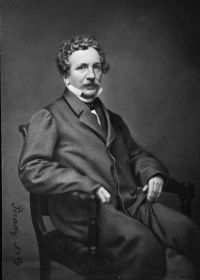 G. P. R. James,
The Gipsy: A Tale (Vols I & II)
G. P. R. James,
The Gipsy: A Tale (Vols I & II)
“ That what is really good may always have ultimate success, is true, undoubtedly, when spoken of transcendent merit or of superexcellent qualities; but this transcendent merit only appears once, perhaps, in a century; and the world shows that, in the great mass of worldly things, the every-day virtues, the every-day exertions, the every-day characters which surround us in this busy existence, virtue and merit are not always ultimately successful. ”
John Breckinridge, A Memorial of Mrs. Margaret Breckinridge
“ How fiend-like, to sicken and repine at excellence! How base, to be displeased and mortified when we contemplate the superior prosperity, happiness, or accomplishments of others! When you witness such superior attainments or excellence, let the only effort be to excite gratitude to God for its existence, and a generous emulation of it in yourselves. ”
 Lucius Annaeus Seneca,
L. Annaeus Seneca on Benefits
Lucius Annaeus Seneca,
L. Annaeus Seneca on Benefits
“ You have nothing to do with the definition of benefits, or with the question whether so great and noble a name ought to be degraded by applying it to such vulgar and mean matters as these, nor do we seek for truth that we may use it to the disadvantage of others; do you adjust your minds to the semblance of truth, and while you are learning what is really honourable, respect everything to which the name of honour is applied. ”
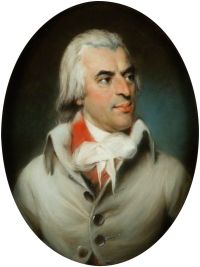 Arthur Young,
The Autobiography of Arthur Young
(1898)
Arthur Young,
The Autobiography of Arthur Young
(1898)
“ Their vices may differ, but they are all equally remote from virtue, truth, justice, gratitude, the love of excellence, or any other of those qualities which constitute the real dignity of human nature. ”
 Keshub Chunder Sen,
Education in India
(1870)
Keshub Chunder Sen,
Education in India
(1870)
“ If merit is not recognised, still it is merit, and it ought to be honoured as such; but if it is rewarded, it becomes valuable in the eyes of all, and everybody is encouraged to pursue that course in which merit obtains its due reward. ”
“ You think that if merit's exalted 'Tis excellent sport to decry it, And trail its good name in the gutter; And that cynics, white-gloved and cravatted, Are the cream and quintessence of all things, Ass of a public! You think that success must be merit, That honour and virtue and courage Are all very well in their places, But that money's a thousand times better ”
Jonathan Swift,
The Works of the Rev. Jonathan Swift
(1801)
“ He loved virtue for its own sake, and was content it should be its own reward. The means to arrive at rank, fortune, and fame, the three great objects of pursuit in other men, though all thrown in his way, he utterly despised, satisfied with having deserved them. ”
Earl of Philip Dormer Stanhope Chesterfield, Letters to His Son, Complete
“ Consider your own situation; you have not the advantage of rank or fortune to bear you up; I shall, very probably, be out of the world before you can properly be said to be in it. What then will you have to rely on but your own merit? That alone must raise you, and that alone will raise you, if you have but enough of it. I have often heard and read of oppressed and unrewarded merit, but I have oftener (I might say always) seen great merit make its way, and meet with its reward, to a certain degree at least, in spite of all difficulties. ”
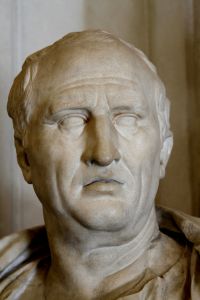 Marcus Tullius Cicero,
On Invention — Book 2
Marcus Tullius Cicero,
On Invention — Book 2
“ There are many things, then, which allure us both by their dignity and also by the advantage which may be derived from them: such as glory, dignity, influence, friendship. Glory is the fact of a person's being repeatedly spoken of to his praise; dignity is the honourable authority of a person, combined with attention and honour and worthy respect paid to him. Influence is a great abundance of power or majesty, or of any sort of resource. ”
Edward Forbes, The Palace and Park
“ To all—their due! If the creations of the mind stand paramount in our estimation, let appropriate honour be rendered to the skill of hand and eye, which alone can give vitality and form to our noblest conceptions. ”
 William Jennings Bryan,
The World's Famous Orations
(1906)
William Jennings Bryan,
The World's Famous Orations
(1906)
“ Do you ever fail in attention to what interests your honor or glory? What indefatigable cares! what exertions and industry, to make them prosper! To what lengths we see you go, to increase your interest or to improve your fortune! ”
 Jean-Baptiste Massillon,
Sermons
(1879)
Jean-Baptiste Massillon,
Sermons
(1879)
“ I say his benefits: for, with regard to you, he hath not confined them to the mere external advantages of fortune. He hath likewise produced you with more favourable dispositions to virtue than the simple people; a heart more noble, and more exalted; happier inclinations; sentiments more worthy of the grandeur of faith; more understanding, elevation of mind, knowledge, instruction, and relish for good. ”
Olive Higgins Prouty, The Fifth Wheel (1916)
“ With what grace, intelligence, and appreciation of values would you move among the other monitors of great fortunes, admired by them, praised, and loved, I think. What a factor for good you could become! ”
David Starr Jordan, The Call of the Twentieth Century…
“ You will hear that your first duty is to get land and money, place and fame. 'What is this truth you seek? What is this beauty?' men will ask in derision. If, nevertheless, God have called any of you to explain truth and beauty, be bold, be firm, be true. ”
 Guglielmo Ferrero,
Ancient Rome and Modern America…
Guglielmo Ferrero,
Ancient Rome and Modern America…
“ Which is the most necessary, the most noble, and the most exalted? Which ought to be surrounded with the greatest respect, covered with the greatest honours, and recompensed with the most considerable rewards? ”
George Hay, Works of the Right Rev. Bishop Hay of Edinburgh… (1871)
“ It gives a dignity, value, and merit to all our good works, which makes them most acceptable in the sight of God, and worthy of an ample reward from Him, both of an increase of grace in this life and of eternal glory in the life to come. ”
William Hazlitt, The collected works of William Hazlitt… (1902)
“ If merit means something in character, independent of motives and of all other things, then there can be no such thing as merit: but if by merit we mean something which excites our approbation of one character more than another, and which something is still farther entitled to our approbation, because it depends upon it for its motive and encouragement, then undoubtedly this word has a rational meaning in it. ”
St. George William Joseph Stock, Deductive Logic
“ The term 'virtue,' for instance, in one sense, namely, as signifying moral excellence in general, without distinction of kind, is strictly a singular term, as being the name of one attribute: but as applied to different varieties of moral excellence—justice, generosity, gentleness and so on—it is a common term, as being a name which is applicable, in the same sense, to a class of attributes. ”
 David Hume,
Philosophical Works, v. 2 (of 4…
David Hume,
Philosophical Works, v. 2 (of 4…
“ From these principles, we may easily account for that merit which is commonly ascribed to generosity, humanity, compassion, gratitude, friendship, fidelity, zeal, disinterestedness, liberality, and all those other qualities which form the character of good and benevolent. ”
 Diodorus Siculus,
Historical Library — Preface
(1814)
Diodorus Siculus,
Historical Library — Preface
(1814)
“ But those who have signalized themselves by virtuous actions, are made famous in every age, their praises being proclaimed, as it were, by a divine voice from history.I judge it therefore honourable and commandable, and a piece of admirable wisdom and prudence, to purchase that glory which is immortal, with labours and sufferings that are but short and temporal. ”
Rev. W. Harris, The Preacher's Complete Homiletic Commentary on the Books of the Bible…
“ But all men who have any striking intellectual gifts or moral excellencies will be subject to this refiner’s fire, and if they pass through it uninjured they will prove that they are made of very pure metal. As we remarked on verse 2, page 725, merit will win praise, and therefore every deserving man will be more or less subject to this test, and his conduct and bearing under it will reveal the real character of his motives and the strength of his principles. ”
 Benjamin Fiske Barrett,
The New View of Hell
(1872)
Benjamin Fiske Barrett,
The New View of Hell
(1872)
“ Thus we speak familiarly of a high order of intellect, of a high-minded man, of lofty souls, superior worth, exalted wisdom and love. We say of an individual that he stands high in the community, high in the church or in the state, that he is above others, etc., when our meaning is that he is spiritually or mentally above them—superior in wisdom, skill, integrity, and moral worth. ”
 Adam Smith,
The Essays of Adam Smith
Adam Smith,
The Essays of Adam Smith
“ They could not fail, therefore, to ascribe to those beings, for the excellence of whose nature they still conceived the highest admiration, those sentiments and qualities which are the great ornaments of humanity, and which seem to raise it to a resemblance of divine perfection, the love of virtue and beneficence, and the abhorrence of vice and injustice. ”
Richard Hurd, The works of Richard Hurd, volume 3…
“ Yet, in looking into particulars, we find that much is to be attributed to fortune, as well as skill; and that her glory is even lessened by considerations, which, on a careless view, may seem to augment it. ”
