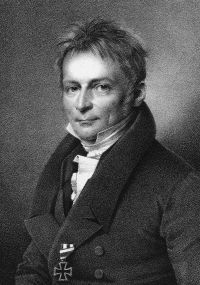
Henrik Steffens

Henrik Steffens

Summary

Portrait of Henrik Steffens Henrik Steffens Foreign Tales and Traditions (1829)

Manifold are the whims of Rubezahl; or, as his goblinship has been designated in English, Number Nip. He is particularly displeased when he hears his name irreverently shouted aloud; and on such occasions seldom fails to send the impertinent traveller home with a drenched skin, by collecting the clouds and raising violent thunder-storms above his head. At other times he takes a malicious pleasure in leading strangers, ignorant of the country, far astray into the most lonely and cheerless regions of his mountain-domains.
Source: Wikisource

Portrait of Henrik Steffens Henrik Steffens Foreign Tales and Traditions (1829)

These hills divide two widely different climates,—forming an enormous barrier or boundary line between the two; the climates of the south and north here meet each other, without any intervening gradation of temperature, and destroy the equilibrium of the air, so that clouds are suddenly formed which rush together, and are again divided, or cling like a light veil around the lofty summit of the mountain,—blasts of wind rush in contrary directions among the high cliffs,—sudden gushes of rain pour down,—and the weather clears up and darkens with surprising rapidity.
Source: Wikisource

Portrait of Henrik Steffens Henrik Steffens Foreign Tales and Traditions (1829)

Again, should Rubezahl espy some poor knight wending his way in a threadbare suit, and upon a sorry animal, among the defiles of the mountain, he will sometimes hit upon a most delicate mode of relieving his necessities. Riding up to the traveller in the appearance of a stately knight, mounted upon a noble charger, he enters into conversation with him, and speedily contrives to engage himself in some absurd wager, stipulating that the loser shall forfeit his raiment and horse.
Source: Wikisource

Get perspective with Kwize: daily news enlightened by great literature