Summary

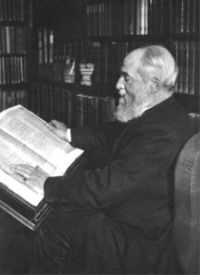
Portrait of Henry Barclay Swete Henry Barclay Swete 1911 Encyclopædia Britannica, Volume 10… (1911)

In these products of the 2nd and 3rd centuries there is much which in its own way was not surpassed by any of the later patristic writings. Yet the post-Nicene literature, considered as literature, reaches a far higher level. Both in East and West, the 4th and 5th centuries form the golden age of dogmatic theology, of homiletic preaching, of exposition, of letter-writing, of Church history, of religious poetry.
Source: Wikisource

Portrait of Henry Barclay Swete Henry Barclay Swete 1911 Encyclopædia Britannica, Volume 10… (1911)

All patristic students now recognize the great inequality of these authors, and admit that they are not free from the faults of their times; it is not denied that much of their exegesis is untenable, or that their logic is often feeble and their rhetoric offensive to modern taste. But against these disadvantages may be set the unique services which the fathers still render to Christian scholars. Their works comprise the whole literature of our faith during the decisive centuries which followed the apostolic age.
Source: Wikisource

Portrait of Henry Barclay Swete Henry Barclay Swete 1911 Encyclopædia Britannica, Volume 10… (1911)

In the narrower sense thus indicated the “fathers” of the Church are the great bishops and other eminent Christian teachers of the earlier centuries, who were conspicuous for soundness of judgment and sanctity of life, and whose writings remained as a court of appeal for their successors. A list of fathers drawn up on this principle will begin with the Christian writers of the 1st century whose writings are not included in the New Testament: where it ought to end is a more difficult point to determine.
Source: Wikisource

Get perspective with Kwize: daily news enlightened by great literature