Summary

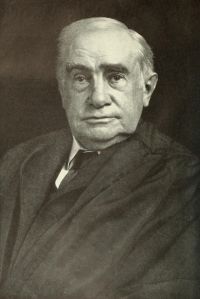
Portrait of Henry Billings Brown Henry Billings Brown Bolln v. Nebraska — Opinion of the Court

Not only did Congress in the act of 1867 declare that Nebraska was admitted upon an equal footing with the original states, but the whole Federal system is based upon the fundamental principle of the equality of the states under the Constitution. The idea that one state is debarred, while the others are granted, the privilege of amending their organic laws to conform to the wishes of their inhabitants, is so repugnant to the theory of their equality under the Constitution that it cannot be entertained even if Congress had power to make such discrimination.
Source: Wikisource

Portrait of Henry Billings Brown Henry Billings Brown Bolln v. Nebraska — Opinion of the Court

But this court has held in many cases that, whatever be the limitations upon the power of a territorial government, they cease to have any operative force, except as voluntarily adopted after such territory has become a state of the Union. Upon the admission of a state it becomes entitled to and possesses all the rights of dominion and sovereignty which belonged to the original states, and, in the language of the act of 1867 admitting the state of Nebraska, it stands 'upon an equal footing with the original states in all respects whatsoever.' Escanaba & L. M. Transp.
Source: Wikisource

Portrait of Henry Billings Brown Henry Billings Brown Bolln v. Nebraska — Opinion of the Court

We have repeatedly decided that an appeal to the jurisdiction of this court must not be a mere afterthought, and that if any right, privilege, or immunity is asserted under the Constitution or laws of the United States it must be specially set up and claimed before the final adjudication of the case in the court from which the appeal is sought to be maintained.
Source: Wikisource

Get perspective with Kwize: daily news enlightened by great literature