Summary

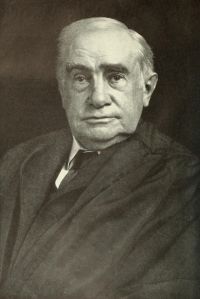
Portrait of Henry Billings Brown Henry Billings Brown Columbia Water-Power Company v…

The supreme court did not expressly pass upon the validity of plaintiff's title to the land, but held that whether the contract conferred upon the defendant the right to erect a steam plant depended upon the fact whether it was merely incidental to, or essential to, the enjoyment of the water plant, and that, no jury having been demanded, the court must assume that the circuit judge decided this question properly, and, even if there were error on his part in the finding of fact, it was not the subject of review by the supreme court in a law case.
Source: Wikisource

Portrait of Henry Billings Brown Henry Billings Brown Columbia Water-Power Company v…

If plaintiff's theory were sound, the penitentiary would be unable to make use of its reserved water power, unless it were also possessed of the requisite means to establish a plant, while under its actual arrangement with the defendant it grants to the latter its surplus water power, and in consideration thereof receives all such power as is necessary for its own purposes, and in addition thereto a substantial annual revenue for its other needs.
Source: Wikisource

Portrait of Henry Billings Brown Henry Billings Brown Columbia Water-Power Company v…

In holding that the contract with the defendant, and the legislative act confirming the same, were valid, the court proceeded upon the idea that the act of 1887 authorizing the transfer of the property to the board of trustees of the Columbia Canal made the reservation the state of the 500 horse power an absolute one; that the directors of the penitentiary could do with it as they pleased, and hence they had the right to turn it over to the defendant, if, in their judgment, such course was warranted by a due regard for the interests of the state.
Source: Wikisource

Get perspective with Kwize: daily news enlightened by great literature