Summary

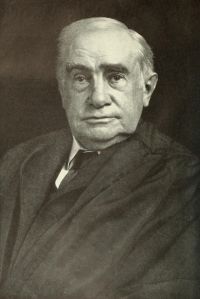
Portrait of Henry Billings Brown Henry Billings Brown Grayson v. Lynch — Opinion of the Court

It certainly does not, in terms, require that the court shall rehear the case upon the testimony as if it were an appeal in equity, but limits its powers of review to such questions as are apparent upon the record, or incorporated in a bill of exceptions. And in cases where the cause is tried by the court without a jury it can only review it in the same manner, and to the extent, as if it had been tried by a jury.
Source: Wikisource

Portrait of Henry Billings Brown Henry Billings Brown Grayson v. Lynch — Opinion of the Court

And elsewhere defendants' cattle are spoken of as infected with 'the said contagious disease,' which they communicated to plaintiffs' cattle. It is evident that the words 'infectious' and 'contagious' were not used in any technical sense, or with any intention of averring that plaintiffs' cattle became ill from a contagious, as distinguished from an infectious, disease; and that, reasonably construed, it was only intended to aver that defendants' cattle were afflicted with the Texas cattle fever, and that by the negligence of the defendants they communicated it to the plaintiffs' cattle.
Source: Wikisource

Portrait of Henry Billings Brown Henry Billings Brown Grayson v. Lynch — Opinion of the Court

There are in reality two entirely separate findings of facts in the case, the first one of which is much more specific than the other, but contains evidence of facts as well as the facts themselves, but is less complete than the 'statement of further findings of facts and conclusions of law,' which is practically a finding of the ultimate facts of the case, and of the conclusion that, from the facts so found, the plaintiffs are entitled to judgment.
Source: Wikisource

Get perspective with Kwize: daily news enlightened by great literature