Summary

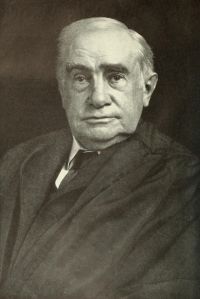
Portrait of Henry Billings Brown Henry Billings Brown International Tooth-Crown Company v…

It is hardly necessary to say that it is no invention, within the meaning of the law, to perform with increassed speed a series of surgical operations old in themselves, and in the order in which they were before performed. With what celerity these successive operations shall be performed depends entirely upon the judgment and skill of the operator, and does not involve any question of novelty which would entitle him to a patent therefor.
Source: Wikisource

Portrait of Henry Billings Brown Henry Billings Brown International Tooth-Crown Company v…

Richmond naturally laid great stress upon the hermetical sealing of the cap; as he must have been satisfied that his first operations constituted a complete abandonment of what he did to the public, and that the entire validity of his proposed patent would depend upon his ability to draw a distinction between his operations as formerly and as then conducted. We are satisfied, however, that his real invention, and the only one to which he was properly entitled to a patent, is such as he put in practice prior to the years 1878 and 1879, and taught so extensively throughout the country.
Source: Wikisource

Portrait of Henry Billings Brown Henry Billings Brown International Tooth-Crown Company v…

Pavement Co., 97 U.S. 126, a patentee has a right to test the durability of his invention as one of the elements of its success, it is manifest that his experiments to that end should extend no further, either in time or in the number of cases in which it is used, than is reasonably necessary for that purpose. In that case the inventor of a pavement who had filed a caveat therefor laid 75 feet of it upon an avenue belonging to a toll corporation, of which he was a stockholder, and allowed it to remain there six years before he took out his patent, visiting it almost daily.
Source: Wikisource

Get perspective with Kwize: daily news enlightened by great literature