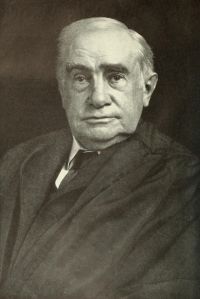
 Henry Billings Brown,
Knights Templars' Masons' Life Indemnity Company v…
Henry Billings Brown,
Knights Templars' Masons' Life Indemnity Company v…
“ The statute was manifestly intended to apply to all cases of self-destruction or suicide, unless the same were contemplated at the time application was made for the policy, and the fact that we may have given a different construction to the same words when used in a policy of insurance does not militate against this theory. The same words may require a different construction when used in different documents, as, for instance, in a contract, and a statute; and identity of words is not decisive of identity of meaning where they are used in different connections and for different purposes. ”
