Summary

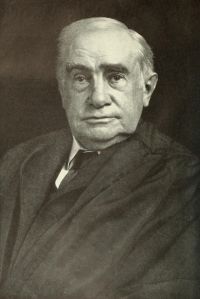
Portrait of Henry Billings Brown Henry Billings Brown Lomax v. Pickering — Opinion of the Court

A deed may be void by reason of the infancy or coverture of the grantors, and yet may be, under the laws of the state, entitled to record, and notice to subsequent purchasers. While the record of a void deed is of no greater effect than the deed itself, and is not such notice as will give protection to a bona fide purchaser, yet it may, under certain circumstances, be a notice to intending purchasers, or third persons, that the grantor has intended and undertaken to convey his title.
Source: Wikisource

Portrait of Henry Billings Brown Henry Billings Brown Lomax v. Pickering — Opinion of the Court

Defendant, however, relies upon the fact that the McClure deed was recorded, with the approval of the president indorsed thereon, March 11, 1871, while plaintiff's deed, with such approval, was no recorded until March 12, 1873. The real question, then, is whether the recording of the Horton deed of July 16, 1861, without the approval of the president indorsed thereon, was notice of plaintiff's title to subsequent purchasers.
Source: Wikisource

Portrait of Henry Billings Brown Henry Billings Brown Lomax v. Pickering — Opinion of the Court

There is nothing in the fact that the partition proceedings under which Robinson obtained title to the land in dispute were not approved by the president. Not only were these partition proceedings set forth as a part of the record of the case at the time he approved the Horton deed, but, as already held in the prior case (page 316, 145 U.S., and page 860, 12 Sup. Ct.)
Source: Wikisource

Get perspective with Kwize: daily news enlightened by great literature