Summary

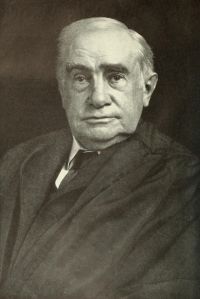
Portrait of Henry Billings Brown Henry Billings Brown Kirby v. Tallmadge — Opinion of the Court

The rule is universal that, if the possession be consistent with the record title, it is no notice of an unrecorded title. But where the land is used for the purpose of a home, and is jointly occupied by husband and wife, neither of whom has title by record, we think that, in view of the frequency with which homestead property is taken in the name of the wife, the proposed purchaser is bound to make some inquiry as to their title.
Source: Wikisource

Portrait of Henry Billings Brown Henry Billings Brown Kirby v. Tallmadge — Opinion of the Court

There must be such an occupation of the premises as a man of ordinary prudence, treating for the acquisition of some interest therein, would observe, and, observing, would perceive to be inconsistent with the right of him with whom he was treating, and so be led to inquiry.'
So, in Atwood v. Bearss, 47 Mich. 72, 10 N. W. 112, the title to property, upon the record, appeared to be in the wife. Her husband's previous occupation had been under her ownership, and in right of the marital relation, and nothing had transpired to suggest that she had made the property over to him.
Source: Wikisource

Portrait of Henry Billings Brown Henry Billings Brown Kirby v. Tallmadge — Opinion of the Court

Her failure to cause the deed to be recorded is not an unusual piece of carelessness, nor is it an infrequent cause of litigation. Under the circumstances of the case, it raises no presumption of fraud. What motives she may have had for taking the title to the property in the name of Mr. Miller is entirely immaterial to the present controversy, although it appears from her testimony that she was possessed of money in her own right, and took this method of investing it.
Source: Wikisource

Get perspective with Kwize: daily news enlightened by great literature