Summary

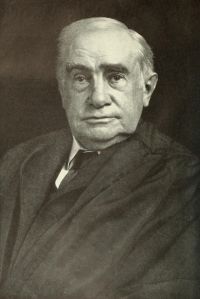
Portrait of Henry Billings Brown Henry Billings Brown McDonald v. Dewey — Opinion of the Court

In short, the question of liability is largely determinable by the presence or absence of an intent to evade liability. The fact that the sale was made to an insolvent buyer is doubtless additional evidence of the original fraudulent intent, but would not be in itself sufficient to constitute fraud without notice of the insolvency of the bank. The stockholder is not deprived of his right to sell his stock by the fact that the sale is made to an insolvent person, unless it be made with knowledge of the insolvency of the bank.
Source: Wikisource

Portrait of Henry Billings Brown Henry Billings Brown McDonald v. Dewey — Opinion of the Court

The capital stock of each association shall be divided into shares of one hundred dollars each, and be deemed personal property, and transferable on the books of the association in such manner as may be prescribed in the by-laws or articles of association. Every person becoming a shareholder by such transfer shall, in proportion to his shares, succeed to all the rights and liabilities of the prior holder of such shares; and no change shall be made in the articles of association by which the rights, remedies, or security of the existing creditors of the association shall be impaired.
Source: Wikisource

Portrait of Henry Billings Brown Henry Billings Brown McDonald v. Dewey — Opinion of the Court

The transferrer can only be held liable if the bank be insolvent, and such insolvency be known, or ought to have been known, to him from his relations to the bank, since the transfer is prima facie valid, and shifts to the transferee the burden of the responsibility, which can be laid upon the original stockholder only in case of bad faith, or evidence of a purpose to evade liability.
Source: Wikisource

Get perspective with Kwize: daily news enlightened by great literature