
“ I asked."Owing to insolvency, madam," was the quick reply, and the man darted a keen glance into my face.Insolvency! I knew what that meant. It was another word for ruin, for bankruptcy. In all probability, if we took that detestable house, we also would have to leave on account of insolvency, for what nice, cheerful, paying guests would care to live with us there? I shook my head. Surely there must be somewhere other houses to let. ”
Insolvency
Definition and stakes
Insolvency refers to the inability of an individual or organization to fulfill financial obligations when they become due, and it takes two main forms: cash-flow insolvency, in which assets are present but not liquid, and balance-sheet insolvency, where liabilities exceed assets. Scholars such as Roy B. Kester view it as a trigger for corporate liquidation, while Thomas Paine differentiates insolvency from bankruptcy, noting its role as a precursor.
Nathan Clifford emphasizes its legal consequences under the Bankrupt Act, focusing on creditors' rights to evaluate a debtor's solvency. These viewpoints highlight insolvency as a key concept connecting economic weakness with legal structures, influencing both corporate reorganization and personal financial collapse.
Quotes about “insolvency”
Roy B. Kester, Accounting theory and practice… (1922)
“ Insolvency is the most usual reason for liquidating a corporation. Insolvency may be either actual or legal. By the National Bankruptcy Act insolvency is defined as the condition in which the assets of a person, firm, or corporation are less than the debts. This definition emphasizes the economic point of view. A corporation is legally insolvent when the cash assets are not sufficient to pay debts when they become due. ”
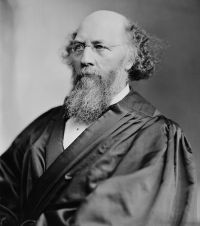 Stephen Johnson Field,
Cook v. Tullis — Opinion of the Court
Stephen Johnson Field,
Cook v. Tullis — Opinion of the Court
“ An insolvent is not bound, in the misfortune of his insolvency, to abandon all dealing with his property; his creditors can only complain if he waste his estate or give preference in its disposition to one over another. ”
 Melville Fuller,
Merrill v. National Bank of Jacksonville…
Melville Fuller,
Merrill v. National Bank of Jacksonville…
“ We repeat that it appears to us that the secured creditor is a creditor to the full amount due him when the insolvency is declared, just as much as the unsecured creditor is, and cannot be subjected to a different rule. And, as the basis on which all creditors are to draw dividends is the amount of their claims at the time of the declaration of insolvency, it necessarily results, for the purpose of fixing that basis, that it is immaterial what collateral any particular creditor may have. ”
 Thomas Paine,
The Writings of Thomas Paine, Complete
Thomas Paine,
The Writings of Thomas Paine, Complete
“ Those who had formerly predicted that the funding system would break up when the debt should amount to one hundred or one hundred and fifty millions, erred only in not distinguishing between insolvency and actual bankruptcy; for the insolvency commenced as soon as the government became unable to pay the interest in cash, or to give cash for the bank notes in which the interest was paid, whether that inability was known or not, or whether it was suspected or not. Insolvency always takes place before bankruptcy; for bankruptcy is nothing more than the publication of that insolvency. ”
Citizens Banking Company v. Ravenna National Bank of Ravenna Ohio…
“ Only through the combination of the three elements is the act of bankruptcy committed. Insolvency alone does not suffice, nor is it enough that it be coupled with suffering or permitting a creditor to obtain a preference by legal proceedings. ”
Nathan Clifford, Dutcher v. Wright — Opinion of the Court
“ Insolvency, in the sense of the Bankrupt Act, means that the party whose business affairs are in question is unable to pay his debts as they become due, in the ordinary course of his daily transactions; and a creditor may be said to have reasonable cause to believe his debtor to be insolvent when such a state of facts is brought to his notice respecting the affairs and pecuniary condition of his debtor as would lead a prudent man to the conclusion that the debtor is unable to meet his obligations as they mature, in the ordinary course of his business. ”
 Harlan F. Stone,
Pennsylvania v. Williams — Opinion of the Court
Harlan F. Stone,
Pennsylvania v. Williams — Opinion of the Court
“ The bill alleged the insolvency of the association and a threatened race of diligence by its creditors to satisfy their claims from the assets of the corporation, and prayed the appointment of receivers for the corporation, the liquidation of its business and assets, and the usual injunction restraining creditors and others from interfering with or taking possession of its property. ”
 Morrison Waite,
United States White v. Knox — Opinion of the Court
Morrison Waite,
United States White v. Knox — Opinion of the Court
“ The business of the bank must stop when insolvency is declared. Rev. St. § 5228. No new debt can be made after that. The only claims the comptroller can recognize in the settlement the affairs of the bank are those which are shown by proof satisfactory to him or by the adjudication of a competent court to have had their origin in something done before the insolvency. It is clearly his duty, therefore, in paying dividends, to take the value of the claim at that time as the basis of distribution. ”
Unidroit, Protocol to the Convention on International Interests in Mobile Equipment on Matters Specific to… (2007)
“ Upon the occurrence of an insolvency-related event, the insolvency administrator or the debtor, as applicable, shall within the cure period: (a) cure all defaults other than a default constituted by the opening of insolvency proceedings and agree to perform all future obligations, under the agreement and related transaction documents; or (b) give the creditor the opportunity to take possession of the railway rolling stock in accordance with the applicable law. ”
J. N. Larned, History for ready reference, Volume 1…
“ The treatment of the insolvent was wholly different from that of the bankrupt. The bankruptcy law was founded on the principle that the goods and not the person of the debtor should be liable for the debt; the insolvency law enabled the person of the debtor to be seized, but provided no machinery for obtaining his goods. ... Up to 1838 the first step in insolvency was the arrest of the debtor. Any person who made a deposition on oath that some other person was in debt to him, could obtain his arrest on what was known as 'mesne process.' The oath might possibly be untrue ”
Ward Hunt, Crapo v. Kelly — Opinion of the Court
“ Assignees in insolvency under the comprehensive rule by which the assignee is vested with all the rights of property belonging to the bankrupt, acquire the same right as creditors to avoid any transactions of the insolvent debtor which were intended to enable a third party to hold his property in trust for his own benefit. ”
Thomas Hart Benton, Thirty Years' View (Vol. 2 of 2…
“ The two sections are accordant, and identical in their provisions. They keep up the great distinction between insolvency and bankruptcy, which some of our judges have undertaken to abrogate; they keep up, also, the great distinction between the proper subjects of bankruptcy—to wit: traders, and those who are not traders; and they keep up the distinction between the release of the person (which is the object of insolvent laws) and the extinction of the debt with the consent of creditors, which is the object of bankrupt systems. ”
Horace Gray, Brown v. Smart — Opinion of the Court
“ But even if it should be held that such a law could not invalidate such a conveyance so far as citizens of other states are concerned, it is clearly valid so far as it makes the conveyance an act of insolvency sufficient to support an adjudication of insolvency, and the appointment of a trustee or assignee to take and distribute among creditors any property which may lawfully come to his possession. ”
Owen J. Roberts, Straton v. New — Opinion of the Court
“ They invoke the settled rule that state insolvency laws which are tantamount to bankruptcy because they provide for an administration of the debtor's assets and a winding up of his affairs similar to that provided by the national act are suspended while the latter remains in force, and proceedings under them are utterly null and void whether commenced within four months of the filing of a petition in bankruptcy or before. ”
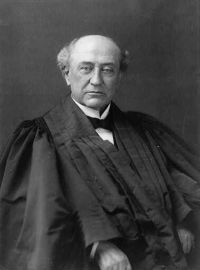 David Josiah Brewer,
Old National Bank v. German-American National Bank…
David Josiah Brewer,
Old National Bank v. German-American National Bank…
“ The condition of insolvency was 'disclosed' because it was known to the officers of the law, and action had been taken by them in consequence thereof, and that is all that is necessary. We think the conclusions of the circuit court were correct, and its judgment is affirmed. ”
Thomas Hart Benton, Thirty Years' View (Vol. 2 of 2…
“ By this section, if the "person" in custody who files a declaration of insolvency shall be a trader, subject to the laws of bankruptcy, it only operates as an act of bankruptcy—upon which the creditors may proceed, or not, as they please. ”
Horace Gray, Wilson Brothers v. Cassius B Nelson…
“ By the corresponding provision of the bankrupt act of 1867, any person who, being bankrupt or insolvent, or in contemplation of bankruptcy or insolvency, 'procures or suffers his property to be taken on legal process, with intent to give a preference to one or more of his creditors,' 'or with the intent, by such disposition of his property, to defeat or delay the operation of this act,' was deemed to have committed an act of bankruptcy. ”
Nathan Clifford, Wager v. Hall — Opinion of the Court
“ The experience of others is rarely a guide to an embarrassed man, and he goes on with the hope of relief, even against hope. To infer, therefore, a design to give a preference to a favored creditor, and in the immediate expectation of bankruptcy, from the mere fact of insolvency, is by no means a certain inference nor such as the jury would be necessarily bound to draw from the debtor's knowledge of his insolvency. ”
 Samuel Freeman Miller,
Godfrey v. Terry — Opinion of the Court
Samuel Freeman Miller,
Godfrey v. Terry — Opinion of the Court
“ If any business man or business firm does the same thing, they are, by the express terms of every bankrupt law, bankrupts. By the bankrupt law of England and of the United States, and by the insolvency laws of Massachusetts and many other States, the person or the partnership in business which is no longer able to pay its current debts as they fall due is insolvent. ”
Joseph P. Bradley, Cunningham v. Norton — Opinion of the Court
“ The obvious answer is that if this is a necessary requirement, the deed does state that the assignor 'is indebted to divers persons in considerable sums of money, which he is at present unable to pay in full.' When a person is unable to pay his debts, he is understood to be insolvent. It is difficult to give a more accurate definition of insolvency. ”
John Smith, 1911 Encyclopædia Britannica (1910)
“ When a person’s financial liabilities are greater than his means of meeting them, he is said to be “insolvent”; but he may nevertheless be able to carry on his business affairs by means of credit, paying old debts by incurring new ones, and he may even, if fortunate, regain a position of solvency without his creditors ever being aware of his true condition. And even when his insolvency becomes public and default occurs, a debtor may still avert bankruptcy if he is able to effect a voluntary arrangement with his creditors. ”
Edward Douglass White, Yardley v. Philler — Opinion of the Court
“ The claims of both parties, therefore, when analyzed, amount to the assertion, as a proposition of law, that they both have greater rights in consequence of the insolvency than they would have had if the insolvency had not taken place. ”
 William R. Day,
New York County National Bank v…
William R. Day,
New York County National Bank v…
“ If this argument were to prevail, it would, in cases of insolvency, defeat the right of set-off recognized and enforced in the law, as every creditor of the bankrupt holding a claim against the estate subject to reduction to the full amount of a debt due the bankrupt receives a preference in the fact that, to the extent of the set-off, he is paid in full. ”
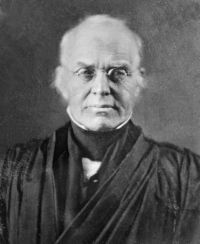 Joseph Story,
The St. Joze Indiano — Opinion of the Court
Joseph Story,
The St. Joze Indiano — Opinion of the Court
“ That right exists in the single case of insolvency, and presupposes, not only that the property has passed to the consignee, but that the possession is in a third person in the transit to the consignee. ”
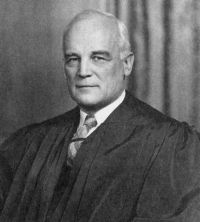 Harold Hitz Burton,
Order of United Commercial Travelers of America v…
Harold Hitz Burton,
Order of United Commercial Travelers of America v…
“ For insofar as a mutual or fraternal insurance policyholder assumes the assessment obligation which a stockholder may bear in other companies, he underwrites the risk that the corporation of which he is an owner might become insolvent. And that insolvency, particularly of an insurance company, would occur and generally become a responsibility of the chartering state where the principal business is conducted. ”
Pierce Butler, United States v. Oklahoma — Opinion of the Court
“ Mere inability of the debtor to pay all his debts in ordinary course of business is not insolvency within the meaning of the act, but it must be manifested in one of the modes pointed out in the latter part of the statute which defines or explains the meaning of insolvency referred to in the earlier part. ”
by John Marshall Harlan, Tracy v. Tuffly — Opinion of the Court
“ We are of opinion, therefore, that, in so far as article 3460 forbids a limited partnership, when it is insolvent, or contemplates insolvency, from making an assignment of its property for the benefit only of such creditors as will accept their proportional share of the proceeds of the effects assigned, and discharge their claims,-the share received being sufficient to pay one-third of the debts of the consenting creditor,-it is modified by the act of 1879, as amended by that of 1883. ”
William Strong, Clark v. Iselin — Opinion of the Court
“ The debtor must be insolvent, or contemplating insolvency, when the alleged preference is given. And he must then have in view giving a preference. He must procure the attachment or the entry of the judgment, the execution, and the levy, with a present intention to prefer the creditor. The unlawful view to a preference must coexist with the procurement. It is not enough that it precedes the entry of the judgment and the levy of the execution, or that it follows. ”
by John Marshall Harlan, Tracy v. Tuffly — Opinion of the Court
“ The same considerations of public policy that require legislation under which an insolvent individual debtor and an insolvent general partnership may turn over their property to such creditors as willr elease their debts would seem to have equal force in the case of limited partnerships that are insolvent, or contemplate insolvency. ”
David Davis, Wills v. Claflin — Opinion of the Court
“ If this were so, it would by no means follow that the record was inadmissible to sustain that issue; but, be this as it may, these averments, as we construe them, are distinct, and independent of each other. The first is complete in itself, because, if the makers were insolvent, it would have been idle to bring a suit against them. But there are other things besides insolvency which might render a suit unavailing; as, for instance, want of consideration in the note, or, as in this case, an adjudication in bankruptcy. ”
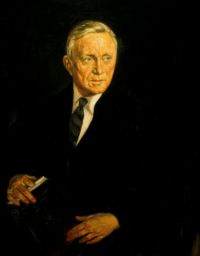 William O. Douglas,
Helvering v. Alabama Asphaltic Limestone Company…
William O. Douglas,
Helvering v. Alabama Asphaltic Limestone Company…
“ Insolvency reorganizations are within the family of financial readjustments embraced in those terms as used in this particular statute. Some contention, however, is made that this transaction did not meet the statutory standard because the properties acquired by the new corporation belonged at that time to the committee and not to the old corporation. ”
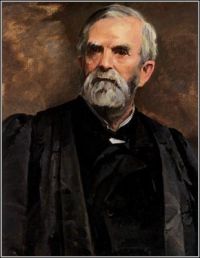 William Burnham Woods,
First National Bank of Xenia Ohio v…
William Burnham Woods,
First National Bank of Xenia Ohio v…
“ The insolvency and pecuniary embarrassment of a person may be shown as evidence that he has not paid all his debts; but they do not tend to show that he has not paid a particular debt. We think the evidence of the insolvency of McMillan was properly excluded. ”
George Sutherland, Chicago Title Trust Company v. Forty-One Thirty-Six Wilcox Bldg Corporation…
“ The dissolution effected under Illinois law is in no way related to a state of insolvency or bankruptcy. Insolvency or bankruptcy as a ground for dissolution is not within the terms or contemplation of the law. Liquidation of a corporation is no part of the purpose of the dissolution; nor is insolvency or liquidation involved in the proceedings to enforce the mechanics' liens or foreclose the mortgages. ”
Louis Brandeis, First National Bank of Cincinnati v…
“ The case before us is of a different character. The possibility of insolvency was not mentioned when the board of directors voted to make default in the payment of the semiannual interest on its funded indebtedness and approved the plan of reorganization. While defaulting on its debentures, the corporation continued its business operations and paid promptly its merchandise and other unfunded indebtedness. ”
Stephen Johnson Field,
Shaw v. Bill — Opinion of the Court
“ The insolvency of the company and its want of funds at the place designated appear from the allegations of the bill; and, where such is the fact, no demand at the place is required. The law does not exact in such a case the performance of a fruitless act. ”
Edward Douglass White, George West Company v. Lea — Opinion of the Court
“ Therefore, though the rules and forms in bankruptcy provide for an issue as to solvency in cases of involuntary bankruptcy, where by the statute such issue becomes irrelevant, because the particular act relied on in a given case conclusively imports a right to the adjudication in bankruptcy if the act be established, the allegation of insolvency in the petition becomes superfluous, or, if made, need not be traversed. ”
Samuel Freeman Miller,
Jones v. Walker — Opinion of the Court
“ It very fully appears that the insolvency was brought about by accommodation indorsements for others, made after the last dividend was paid; that the firm, but for this, would have remained solvent, and that, in regard to this, none of the defendants were to blame except Frederick, who, being a full partner, is liable personally for all the debts of the firm. ”
 John Stuart Mill,
Principles of Political Economy
(1871)
John Stuart Mill,
Principles of Political Economy
(1871)
“ But a large proportion of the debts on which insolvency laws take effect, are those due by small tradesmen to the dealers who supply them: and on no class of debts does the demoralization occasioned by a bad state of the law, operate more perniciously. ”
Related terms
Authors who wrote about “insolvency”
UnidroitWilliam WilliamsNathan CliffordSamuel Freeman MillerRoy B. KesterJoseph P. Bradleyby John Marshall HarlanMelville FullerJohn Stuart MillStephen Johnson FieldHorace GrayThomas Hart BentonWilliam O. DouglasEdward Douglass WhiteThomas PaineOwen J. RobertsWard HuntDavid Josiah BrewerJohn SmithJ. N. Larned
Samuel Freeman MillerRoy B. KesterJoseph P. Bradleyby John Marshall HarlanMelville FullerJohn Stuart MillStephen Johnson FieldHorace GrayThomas Hart BentonWilliam O. DouglasEdward Douglass WhiteThomas PaineOwen J. RobertsWard HuntDavid Josiah BrewerJohn SmithJ. N. Larned