 Ralph Waldo Emerson,
English Traits — Ability
(1856)
Ralph Waldo Emerson,
English Traits — Ability
(1856)
“ Solvency is maintained by means of a national debt, on the principle, "if you will not lend me the money, how can I pay you?" ”
Solvency, a financial term indicating an entity's ability to fulfill its short-, medium-, and long-term liabilities, is crucial to evaluating economic stability. While primarily a fiscal measure, writers such as Ralph Waldo Emerson and Burton J. Hendrick examined its significance in national debt and insurance, respectively, emphasizing its function in maintaining financial systems.
In contrast, Charles Dickens portrayed insolvency as a societal norm in Little Dorrit, juxtaposing economic theory with human experience. These differing viewpoints highlight solvency's dual nature—as both a technical standard and a tool for critiquing economic systems—linking practical finance with wider socio-economic discussion.
Ralph Waldo Emerson,
English Traits — Ability
(1856)
“ Solvency is maintained by means of a national debt, on the principle, "if you will not lend me the money, how can I pay you?" ”
Burton J. Hendrick, The Story of Life Insurance — Chapter VI, The Raid on the Surplus
“ That they must earn to maintain solvency; anything beyond is theoretically returned to the policy-holders. Thus they have an absolute standard of investment earnings; the unpardonable sin is the realization of less than three per cent. If they have securities yielding less than this minimum, they have a deficit in the reserves which must be made up from other sources—that is, the surplus. Because these companies have this great accumulation to fall back upon they have sunk millions in investments that do not realize the interest rate needed to maintain solvency. ”
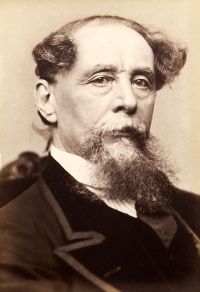 Charles Dickens,
Little Dorrit
(1857)
Charles Dickens,
Little Dorrit
(1857)
“ It was evident from the general tone of the whole party, that they had come to regard insolvency as the normal state of mankind, and the payment of debts as a disease that occasionally broke out. ”
 John Stuart Mill,
Principles of Political Economy
(1871)
John Stuart Mill,
Principles of Political Economy
(1871)
“ We have investigated the laws which determine the value of two classes of commodities: the small class which, being limited to a definite quantity, have their value entirely determined by demand and supply, save that their cost of production (if they have any) constitutes a minimum below which they cannot permanently fall; and the large class, which can be multiplied ad libitum by labour and capital, and of which the cost of production fixes the maximum as well as the minimum at which they can permanently exchange. ”
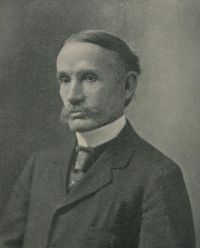 John Bates Clark,
Essentials of Economic Theory
John Bates Clark,
Essentials of Economic Theory
“ The price of a product into which these elements enter includes something that represents the value which they have in situ and before any labor has been expended on them. It is true even in these cases that the value of the product is measured in terms of wages and interest, provided that the exhaustible elements such as ore, oil, etc., are capable of being replenished, or provided that an effective substitute for them is in process of production by means of labor and capital. ”
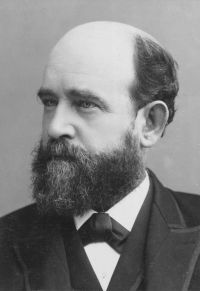 Henry George,
Progress and Poverty (George)…
(1879)
Henry George,
Progress and Poverty (George)…
(1879)
“ When we do not distinguish different parts in the final process of production we do distinguish the value of the materials. The value of these materials may often be again decomposed many times, exhibiting as many clearly defined steps in the creation of the final value. At each of these steps we habitually estimate a creation of value, an addition to capital. ”
John Stuart Mill,
Principles of Political Economy
(1871)
“ Of the capital engaged in the production of any commodity, there is a part which, after being once used, exists no longer as capital; is no longer capable of rendering service to production, or at least not the same service, nor to the same sort of production. Such, for example, is the portion of capital which consists of materials. The tallow and alkali of which soap is made, once used in the manufacture, are destroyed as alkali and tallow ”
Joseph Shield Nicholson, 1911 Encyclopædia Britannica (1911)
“ In the last resort production will not be carried on unless labour and capital receive a sufficient reward and the sufficient reward is the normal value of the factors of production. But when we are comparing the relative values of commodities and are seeking to explain, for example, how it is that for long periods of time these relative values are stable, or conform to some regular law, we have to break up the elements of value into the constituents of the expenses of the various factors of production. ”
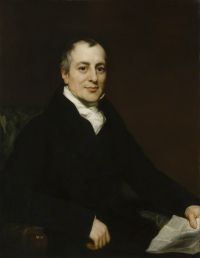 David Ricardo,
Letters of David Ricardo to Thomas Robert Malthus…
David Ricardo,
Letters of David Ricardo to Thomas Robert Malthus…
“ You compare a commodity, in the production of which the advances in labour remain the same while the profits of stock diminish, to another commodity 'obtained by a given quantity of labour, a given quantity of capital, and a given rate of profits.' Is not this supposing two rates of profit at the same time? ”
John Stuart Mill,
Essays on some unsettled Questions of Political Economy
“ If every commodity on an average remained unsold for a length of time equal to that required for its production, it is obvious that, at any one time, no more than half the productive capital of the country would be really performing the functions of capital. ”
 Harlan F. Stone,
Maple Flooring Mfrs' Association v…
Harlan F. Stone,
Maple Flooring Mfrs' Association v…
“ The cost of production, prompt information as to the cost of transprotation, are legitimate subjects of inquiry and knowledge in any industry. So likewise is the production of the commodity in that industry, the aggregate surplus stock, and the prices at which the commodity has actually been sold in the usual course of business. ”
John Stuart Mill,
Principles of Political Economy
(1871)
“ Suppose that, in the expectation that some commodity will rise in price, he determines, not only to invest in it all his ready money, but to take up on credit, from the producers or importers, as much of it as their opinion of his resources will enable him to obtain. ”
John Stuart Mill,
Principles of Political Economy
(1871)
“ VII. Every commodity of which the supply can be indefinitely increased by labour and capital, exchanges for other things proportionally to the cost necessary for producing and bringing to market the most costly portion of the supply required. ”
John Bates Clark,
Essentials of Economic Theory
“ The natural raw material is then worth what the artificial substitute costs in terms of capital and labor, and the finished product which contains some of the natural material sells for the amount which the finished product costs, which is made altogether by labor and capital applied to valueless elements in nature. ”
John Stuart Mill,
Essays on some unsettled Questions of Political Economy
“ Let us now suppose, by way of an extreme case, that some contrivance is discovered, whereby the purposes to which the second third of the produce had been devoted, may be dispensed with altogether: that some means are invented by which the same amount of produce may be procured without the assistance of any fixed capital, or the consumption of any seed or material sufficiently valuable to be worth calculating. ”
John Stuart Mill,
Principles of Political Economy
(1871)
“ Because this phenomenon of over-supply, and consequent inconvenience or loss to the producer or dealer, may exist in the case of any one commodity whatever, many persons, including some distinguished political economists, have thought that it may exist with regard to all commodities; that there may be a general over-production of wealth; a supply of commodities in the aggregate, surpassing the demand; and a consequent depressed condition of all classes of producers. ”
John Stuart Mill,
Principles of Political Economy
(1871)
“ First, let us suppose that the quantity of commodities produced is not greater than the community would be glad to consume: is it, in that case, possible that there should be a deficiency of demand for all commodities, for want of the means of payment? Those who think so cannot have considered what it is which constitutes the means of payment for commodities. ”
Sir Hubert Douglas Henderson, Supply and Demand
“ Whether we were dealing with the price of an ordinary commodity, with joint products, land or capital, we came across relationships which seemed altogether more fundamental than our present industrial system ”
 Silvanus Phillips Thompson,
Calculus Made Easy
(1914)
Silvanus Phillips Thompson,
Calculus Made Easy
(1914)
“ ON TRUE COMPOUND INTEREST AND THE LAW OF ORGANIC GROWTH. Let there be a quantity growing in such a way that the increment of its growth, during a given time, shall always be proportional to its own magnitude. This resembles the process of reckoning interest on money at some fixed rate; for the bigger the capital, the bigger the amount of interest on it in a given time. ”
John Stuart Mill,
Principles of Political Economy
(1871)
“ If we attempt to ascertain the changes in the cost of production of any commodity from the changes in its money price, the conclusion will require to be corrected by the best allowance we can make for the intermediate changes in the cost of the production of money itself. ”
John Stuart Mill,
Principles of Political Economy
(1871)
“ The sequel of our investigation will point out many other qualifications with which the proposition must be received, that the value of the circulating medium depends on the demand and supply, and is in the inverse ratio of the quantity; qualifications which, under a complex system of credit like that existing in England, render the proposition an extremely incorrect expression of the fact. ”
M. Garnier, An Inquiry Into the Nature and Causes of the Wealth of Nations
“ When paper is substituted in the room of gold and silver money, the quantity of the materials, tools, and maintenance, which the whole circulating capital can supply, may be increased by the whole value of gold and silver which used to be employed in purchasing them. The whole value of the great wheel of circulation and distribution is added to the goods which are circulated and distributed by means of it. ”
John Stuart Mill,
Principles of Political Economy
(1871)
“ We should then have a commodity always produced under one and the same combination of all the circumstances which affect permanent value. Such a commodity would be by no means constant in its exchange value ”
 Anders Chydenius,
The National Gain
(1765)
Anders Chydenius,
The National Gain
(1765)
“ If anyone who needs a commodity is prevented from buying it, this commodity will remain on the producer's hands, will be a burden to him and get a black stamp on it, on which the words may be read: "Wasted expenditure of energy." ”
Benjamin M. Anderson, The Value of Money
“ I shall show that the quantity theory conflicts with most of our doctrines of prices, as worked out in our systems of economics. I shall show that, in important cases, the quantity theory conflicts with the law of supply and demand, with the doctrine of cost of production, with the capitalization theory, and with the doctrine of imputation as worked out by the Austrians, whereby the prices of labor, land, and other agents of production rise or fall with the prices of the consumption goods which they produce. ”
John Stuart Mill,
Principles of Political Economy
(1871)
“ The same thing exchanges for a great quantity of some commodities, and for a very small quantity of others. A suit of clothes exchanges for a great quantity of bread, and for a very small quantity of precious stones. The value of a thing in exchange for some commodities may be rising, for others falling. A coat may exchange for less bread this year than last, if the harvest has been bad, but for more glass or iron, if a tax has been taken off those commodities, or an improvement made in their manufacture. ”
John Bates Clark,
Essentials of Economic Theory
“ In the case of the raw materials that gradually ripen into articles for consumption and which we have called passive capital goods, the waste of tissues that takes place is quite unlike that which takes place in the case of active capital goods, the tools and implements that are used in the process. ”
David Ricardo,
On The Principles of Political Economy…
“ The injury suffered will be what I have just described; there will be a worse distribution of the general capital and industry, and therefore less will be produced. The natural price of commodities will be raised, and therefore, though the consumer will be able to purchase to the same money value, he will obtain a less quantity of commodities. ”
 Irving Fisher,
The Purchasing Power of Money…
Irving Fisher,
The Purchasing Power of Money…
“ How shall we decide how much weight should be given, in forming the index, to the stock of durable capital and how much weight to the flow of goods and services through a period of time,—the flow to individuals, which mirrors consumption? ”
 Herbert Spencer,
First Principles
Herbert Spencer,
First Principles
“ The internal actions constituting social functions, exemplify the general principle no less clearly. Supply and demand are continually being adjusted throughout all industrial processes; and this equilibration is interpretable in the same way as preceding ones. The production and distribution of a commodity, is the expression of a certain aggregate of forces causing special kinds and amounts of motion. The price of this commodity, is the measure of a certain other aggregate of forces expended by the labourer who purchases it, in other kinds and amounts of motion. ”
David Ricardo,
On The Principles of Political Economy…
“ In making labour the foundation of the value of commodities, and the comparative quantity of labour which is necessary to their production, the rule which determines the respective quantities of goods which shall be given in exchange for each other, we must not be supposed to deny the accidental and temporary deviations of the actual or market price of commodities from this, their primary and natural price. ”
 Adam Smith,
The Wealth of Nations
(1902)
Adam Smith,
The Wealth of Nations
(1902)
“ As the price or exchangeable value of every particular commodity, taken separately, resolves itself into some one or other, or all of those three parts; so that of all the commodities which compose the whole annual produce of the labor of every country, taken complexly, must resolve itself into the same three parts, and be parcelled out among different inhabitants of the country, either as the wages of their labor, the profits of their stock, or the rent of their land. ”
 Thomas De Quincey,
Memorials and Other Papers — Complete
Thomas De Quincey,
Memorials and Other Papers — Complete
“ It is quite obvious that in cases of this kind,—and they are of constant recurrence,—the value of wages, incomes, or commodities, estimated in the precious metals, will be of little use to us alone. What we want further is some estimate of a kind which may be denominated real value in exchange, implying the quantity of the necessaries and conveniences of life which those wages, incomes, or commodities, will enable the possessor of them to command. ”
Sir Hubert Douglas Henderson, Supply and Demand
“ It is quite obvious that these things are of use, are, indeed, indispensable for production; what more natural than that capital should command a price? It almost seems as though we might pass, without further ado, to a detailed discussion of the forces which determine the amount of this price. ”
Various, Blackwood's Edinburgh Magazine…
“ Let us now see what kind of provision we have laid in for future manufactures—what amount of raw material we have on hand, which, when converted into goods, shall enable us to liquidate this heavy balance, and provide for the future payment of a constantly increasing supply of articles of daily consumpt. We were to be fed by the foreigner, and to work for him, he finding us both the food and materials. ”
Sir Hubert Douglas Henderson, Supply and Demand
“ Let us sum up in a general form our conclusions as to the way in which changes in the supply or demand of a commodity react upon the demand or supply of the other things with which it is jointly demanded or supplied. Everything turns, as we have seen, on the possibility of variation in the proportions in which the things are used or produced together ”
John Stuart Mill,
Essays on some unsettled Questions of Political Economy
“ The principle, that value is proportional to cost of production, being consequently inapplicable, we must revert to a principle anterior to that of cost of production, and from which this last flows as a consequence,—namely, the principle of demand and supply. ”
John Stuart Mill,
Principles of Political Economy
(1871)
“ If on these two branches of industry a tax be imposed of five per cent ad valorem, the last will be charged only with 25l., the first with 55l.; leaving to the one 75l. profit, to the other only 40l. To equalize, therefore, their expectation of profit, the one commodity must rise in price, or the other must fall, or both: commodities made chiefly by immediate labour must rise in value, as compared with those which are chiefly made by machinery. ”
John Stuart Mill,
Principles of Political Economy
(1871)
“ If, then, an addition were made to the circulating medium in the hands of unproductive consumers exclusively, a larger portion of the existing stock of commodities would be bought for unproductive consumption, and a smaller for productive, which state of things, while it lasted, would be equivalent to a diminution of capital ”
Mary Edna Tobias Marcy, Shop Talks on Economics — Prices (1911)
“ In calculating the exchangeable value of a commodity we must add to the quantity of labor last employed, the quantity of labor previously worked up in the raw material of a commodity, and the labor bestowed in the implements, tools, machinery, and buildings, with which labor is assisted. ”
John Stuart Mill,
Principles of Political Economy
“ When, therefore, two or more commodities have a joint cost of production, their natural values relatively to each other are those which will create a demand for each, in the ratio of the quantities in which they are sent forth by the productive process. ”
 Friedrich von Wieser,
The Austrian School and the Theory of Value
(1891)
Friedrich von Wieser,
The Austrian School and the Theory of Value
(1891)
“ The readiest way of expressing in figures the expenditure of materials and labour required to produce any article is to give the supplies to be consumed, the number of working days, the number of tons of coal, the time during which machinery is at work, the figure of each of the infinite number of items used in the production, and so on. ”
