Summary

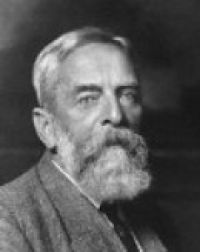
Portrait of Friedrich von Wieser Friedrich von Wieser The Austrian School and the Theory of Value (1891)

Consequently cost of production determines the relative value of produce, while the absolute value of the commodities consumed in the cost is determined by the value of the forthcoming produce.
Labour, like land and capital, owes the reward imputed to it not only to its productiveness, but also to its scarcity, i.e., to the fact that it is not to be had in free abundance. Labour, however, has yet another motive force in itself, by which it can influence the estimation of value. Everyone is personally concerned to evade the toils and perils of labour.
Source: Wikisource

Portrait of Friedrich von Wieser Friedrich von Wieser The Austrian School and the Theory of Value (1891)

The most momentous consequence of the theory of imputation is, I take it, that it is false, with the Socialists, to impute to labour alone the entire productive return. Land and Capital as well must find recognition as collaborating factors in production, from the point of view of practical economy; excepting the case of their being available in superabundant quantities, which, however, can only be true of Land. The fact of fertility alone does not constitute an adequate condition for imputing rent to land, any more than utility as such makes a commodity valuable.
Source: Wikisource

Portrait of Friedrich von Wieser Friedrich von Wieser The Austrian School and the Theory of Value (1891)

If a million tons of grain are lying ready for distribution among the citizens, each ton, assuming it is of equal quality, will have to be held equal in value to any other. In consumption the several tons will not afford equal degrees of utility, but equal utility will be imputed to them as their value. I admit that, when goods are not sold to citizens, but distributed among them, equal prices will not come to be paid for equal items, nevertheless equality in judgments on value would manifest itself in many other directions, chiefly in the calculus of production.
Source: Wikisource

Get perspective with Kwize: daily news enlightened by great literature