Summary

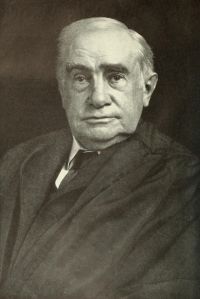
Portrait of Henry Billings Brown Henry Billings Brown McKee v. Lamon — Opinion of the Court

McKee, having obtained possession of the money, may be held accountable by a court of equity for its proper distribution. There can be no doubt of the general proposition that where money is placed in the hands of one person, to be delivered to another, a trust arises in favor of the latter, which he may enforce by bill in equity, if not by action at law.
Source: Wikisource

Portrait of Henry Billings Brown Henry Billings Brown McKee v. Lamon — Opinion of the Court

We are therefore of opinion that complainants, as surviving partners of the firm of Black, Lamon & Co., are entitled to recover the reasonable value of those services from the date of the assignment from McPherson to Black to the date of the McKee contract, which may be taken as denoting the time when the Black contract was abandoned. Whatever services Lamon rendered prior to that time he rendered as a member of, and for the benefit of, the firm of Black, Lamon & Co.; and that, too, is the theory of this bill, which is founded upon a partnership claim.
Source: Wikisource

Portrait of Henry Billings Brown Henry Billings Brown McKee v. Lamon — Opinion of the Court

No claim is made against it, nor is any attempt made to impair the effect of its legislation. By its first contract with Cochrane, made by its agents, February 13, 1855, in pursuance and by virtue of resolutions of its legislative council, of November 9, 1853, and November 10, 1854, it agreed to pay Cochrane, for his services, 30 per cent. of all collections made by him in their behalf. By its second contract, it doubtless assumed that the first contract had been abandoned by Cochrane and his successors, Lamon and Black, and agreed to pay the same 30 per cent.
Source: Wikisource

Get perspective with Kwize: daily news enlightened by great literature