Summary

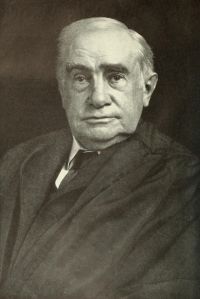
Portrait of Henry Billings Brown Henry Billings Brown Montoya v. United States — Opinion of the Court

Justice Washington recognized war as of two kinds: 'If it be declared in form, it is called solemn, and is one of the perfect kind; because one whole nation is at war with another whole nation, and all the members of the nation declaring war are authorized to commit hostilities against all the members of the other, in every place and under every circumstance. In such a war all the members act under a gengeral authority, and all the rights and consequences of war attach to their condition.
Source: Wikisource

Portrait of Henry Billings Brown Henry Billings Brown Montoya v. United States — Opinion of the Court

In short, the word 'nation' as applied to the uncivilized indians is so much of a misnomer as to be little more than a compliment.
We are more concerned in this case with the meaning of the words 'tribe' and 'band.' By a 'tribe' we understand a body of Indians of the same or a similar race, united in a community under one leadership or government, and inhabiting a particular though sometimes ill-defined territory; by a 'band,' a company of Indians not necessarily, though often, of the same race or tribe, but united under the same leadership in a common design.
Source: Wikisource

Portrait of Henry Billings Brown Henry Billings Brown Montoya v. United States — Opinion of the Court

While a 'band' does not imply the separate racial origin characteristic of a tribe, of which it is usually an offshoot, it does imply a leadership and a concert of action. How large the company must be to constitute a 'band' within the meaning of the act it is unnecessary to decide. It may be doubtful whether it requires more than independence of action, continuity of existence, a common leadership, and concert of action.
Source: Wikisource

Get perspective with Kwize: daily news enlightened by great literature