Summary

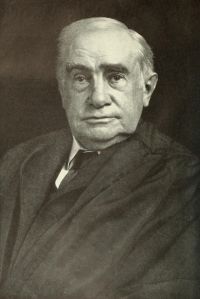
Portrait of Henry Billings Brown Henry Billings Brown Richards v. Chase Elevator Company…

There is certainly no novelty in using two railway tracks instead of one, or in discharging the grain into a second car, instead of a storage bin or a vessel. Unless the combination accomplishes some new result, the mere multiplicity of elements does not make it patentable. So long as each element performs some old and well-known function, the result is not a patentable combination, but an aggregation of elements. Indeed, the multiplicity of elements may go on indefinitely without creating a patentable combination, unless by their collocation a new result be produced.
Source: Wikisource

Portrait of Henry Billings Brown Henry Billings Brown Richards v. Chase Elevator Company…

We do not feel compelled to shut our eyes to a fact so well known as that elevators have for many years been used for transferring grain from railway cars to vessels lying alongside, and that this method involves the use of a railway track entering a fixed or stationary building, an elevator apparatus, elevator hopper scales for weighing the grain, and a discharge spout for discharging the grain into the vessel.
Source: Wikisource

Portrait of Henry Billings Brown Henry Billings Brown Richards v. Chase Elevator Company…

Not a new function or result is suggested by the combination in question. The cars run into the building on railway tracks, as they have done ever since railways were invented. The building is fixed and stationary, as buildings usually are. It is no novelty that it should contain an elevating device, and that the latter should raise the grain to the hopper scale, and should discharge it either it o a bin or a vessel, or into another car.
Source: Wikisource

Get perspective with Kwize: daily news enlightened by great literature