Summary

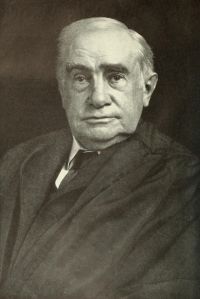
Portrait of Henry Billings Brown Henry Billings Brown The Beaconsfield — Opinion of the Court

No. 8,054: 'If, therefore, there is an ambiguity in the terms of the stipulation, or the construction of them is doubtful, it is not the intention of the party for which we are to inquire, for the will of the party had nothing to do in determining its conditions; the doubt must be removed by consulting the intention of the court, or the law which required the stipulation and dictated its terms.' The introduction, however, of a new cause of action is something which the sureties are not bound to contemplate, and it necessarily follows that they cannot be held.
Source: Wikisource

Portrait of Henry Billings Brown Henry Billings Brown The Beaconsfield — Opinion of the Court

The Beaconsfield having been sunk in a collision with the Britannia, her master and owner, as bailees of her cargo, proceeded against the Britannia for damages done to such cargo. This they had a right to do. It is perfectly well settled that the carrier is so far the representative of the owner that he may sue in his own name, either at common law or in admiralty, for a trespass upon or injury to the property carried. If a cargo be damaged by collision between two vessels, the owner may pursue both vessels or either, or the owner of both or either
Source: Wikisource

Portrait of Henry Billings Brown Henry Billings Brown The Beaconsfield — Opinion of the Court

Stipulations in admiralty are not subject to the rigid rules of the common law with respect to the liability of the surety, and, so long as the cause of action remains practically the same, a mere change in the name of the libelant, as by substituting the real party in interest for a nominal party, will not avoid the stipulation as against the sureties
Source: Wikisource

Get perspective with Kwize: daily news enlightened by great literature