Summary

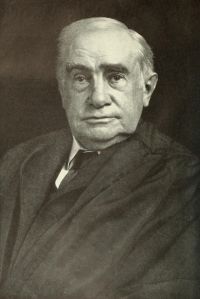
Portrait of Henry Billings Brown Henry Billings Brown The Breakwater — Opinion of the Court

The moment the observance or nonobservance of a rule becomes a matter of doubt or discretion, there is manifest danger, for the judgment of one pilot may lead him to observe the rule, while that of the other may lead him to disregard it. The theory of the claimant that a vessel at rest has no right to start from her wharf in sight of an approaching vessel, and thereby impose upon the latter the obligation to avoid her, is manifestly untenable, and would impose a wholly unnecessary burden upon the navigation of a great port like that of New York.
Source: Wikisource

Portrait of Henry Billings Brown Henry Billings Brown The Breakwater — Opinion of the Court

No fault is to be imputed to the Pavonia for her failure to stop and reverse, since it is quite obvious that if she had slackened speed her tendency to sag down the river would have been greatly increased, and she would practically have been at the mercy of the wind and tide. Her only safe course was to do precisely as she did,-put her wheel hard a port and her engine at full speed. The duty to slacken speed manifestly does not apply where the effect would be to carry a steamer bodily down the current upon another vessel which is trying to avoid her.
Source: Wikisource

Portrait of Henry Billings Brown Henry Billings Brown The Breakwater — Opinion of the Court

The rule which would be applicable in a harbor where the business was light, and the passage of vessels not liable to be impeded, would be inapplicable in a great thoroughfare like the East river.' As it is clear in this case that a collision might have been avoided by prompt and decisive action on the part of the Breakwater after the Pavonia left the wharf, and that with proper management there was no rist of collision, we think that no fault can be imputed to the latter in leaving at the time she did.
Source: Wikisource

Get perspective with Kwize: daily news enlightened by great literature