Summary

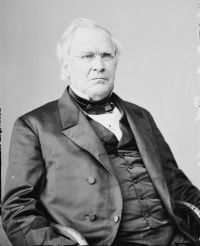
Portrait of Robert Cooper Grier Robert Cooper Grier The Louisiana — Opinion of the Court

To consider this result as evidence of neglect, would destroy the notion of a special and inevitable accident, and would make the owners responsible not only for the storm, but for those hidden perils of the sea, not to be calculated against.
Will it be said that seamanship required of the captain to change his position at the wharf when the tide changed; that is to say, to liberate the steamer from her fastenings, and to go out into Hampton Roads, and come back to the wharf, and lay her bow to the eastward, facing the wind and tide? It is easy to be wise after a catastrophe
Source: Wikisource

Portrait of Robert Cooper Grier Robert Cooper Grier The Louisiana — Opinion of the Court

But when the tide changed so as to strike the stern with a momentum increased by a high wind, and multiplied by the leverage resulting from the length of the vessel exposed below the wharf, the 'necessity' for a change of position ought to have suggested itself to a person of nautical skill, as a proper precaution against a danger which might justly have been anticipated.
Source: Wikisource

Portrait of Robert Cooper Grier Robert Cooper Grier The Louisiana — Opinion of the Court

There is nothing in the case to show specially that the boat was carried off by any regular action of the reversed tide and increased wind. Against these the captain and mate guarded. We infer that it was some one irregular action of the water-something not to have been foreseen as a result even of the changed conditions of tide and wind, which lifted up the stern of the vessel, slackened the stern fastenings, and thus enabled the storm at one special moment to get hold of the boat, and to cause the lines to snap, the wharf to give way, or the vessel to be torn asunder
Source: Wikisource

Get perspective with Kwize: daily news enlightened by great literature