Summary

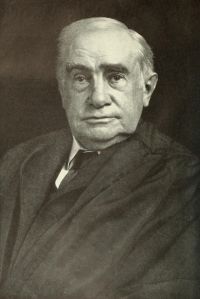
Portrait of Henry Billings Brown Henry Billings Brown The Main v. Williams — Opinion of the Court

In Saxon, from which much of the English language is derived, it is called 'fracht,' whether it be a compensation for transportation in ships by sea, or carriage by land, either of goods or persons, in gross or detail.' With the introduction of steam vessels, however, the carriage of passengers became at once a most important branch of maritime industry, and modern authorities have generally placed the fare or compensation for the carriage of such passengers upon the same footing as freight for the transportation of goods.
Source: Wikisource

Portrait of Henry Billings Brown Henry Billings Brown The Main v. Williams — Opinion of the Court

Prior to the era of steam navigation, travel by sea was comparatively of such little magnitude that 'freight' was commonly used to denote compensation for the carriage of goods, yet, in Les Bones Costumes de la Mar., c. 1, (Black Book, App. pt. 3, p. 51,) it is said 'the term 'passenger' includes all those who ought to pay freight for their persons apart from their merchandise,' and 'every man is called a passenger who pays freight for his own person, and for goods which are not merchandise.
Source: Wikisource

Portrait of Henry Billings Brown Henry Billings Brown The Main v. Williams — Opinion of the Court

While many of the lexicographers, such as Webster, Worcester, and the Imperial Dictionary, still define 'freight' as the sum paid by a party hiring a ship or part of a ship, or for the carriage of goods, in the Century Dictionary it is said to be, in a more general sense, the price paid for the use of a ship, including the transportation of passengers.
Source: Wikisource

Get perspective with Kwize: daily news enlightened by great literature