Summary

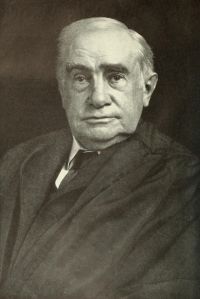
Portrait of Henry Billings Brown Henry Billings Brown United States v. Perkins (163 U.S. 625…

Whether it is within the power of the state to tax bequests to the United States.
(2) Whether, under these statutes, the United States are a corporation exempted by law from taxation.
1. While the laws of all civilized states recognize in every citizen the absolute right to his own earnings, and to the enjoyment of his own property, and the increase thereof, during his life, except so far as the state may require him to contribute his share for public expenses, the right to dispose of his property by will has always been considered purely a creature of statute, and within legislative control.
Source: Wikisource

Portrait of Henry Billings Brown Henry Billings Brown United States v. Perkins (163 U.S. 625…

By the Code Napoleon, gifts of property, whether by acts inter vivos or by will, must not exceed one-half the estate if the testator leave but one child, one-third if he leaves two children, one fourth if he leaves three or more. If he have no children, but leaves ancestors, both in the paternal and maternal line, he may give away but one-half of his property, and but three-fourths if he have ancestors in but one line. By the law of Italy, one-half a testator's property must be distributed equally among all his children.
Source: Wikisource

Portrait of Henry Billings Brown Henry Billings Brown United States v. Perkins (163 U.S. 625…

The act we are now considering plainly intended to require that a person taking the benefit of a civil right secured to him under our laws should pay a certain premium for its enjoyment. In other words, one of the conditions upon which strangers and collateral kindred may acquire a decedent's property, which is subject to the dominion of our laws, is that there shall be paid out of such property a tax of 2 1/2 per cent.
Source: Wikisource

Get perspective with Kwize: daily news enlightened by great literature