Summary

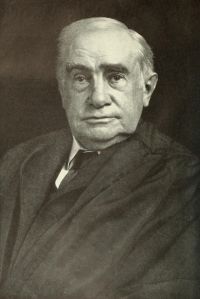
Portrait of Henry Billings Brown Henry Billings Brown United States v. Verdier — Opinion of the Court

There is really no greater hardship in denying the petitioner interest than there would have been if he had not been a judgment debtor of the government.
An inherent vice of petitioner's argument is in the assumption that he and the government stand upon an equality with respect to interest. The truth is that, in its dealings with individuals, public policy demands that the government should occupy an apparently favored position.
Source: Wikisource

Portrait of Henry Billings Brown Henry Billings Brown United States v. Verdier — Opinion of the Court

Upon the other hand, the government did not become a debtor to Verdier until his claim was liquidated; and by Rev. St. § 1091, no interest can be allowed upon any claim against the government up to the time of the rendition of judgment thereon by the court of claims, unless upon a contract expressly stipulating for the payment of interest. The theory upon which interest is claimed seems to be that the postmaster general was in fault for not having readjusted Verdier's salary under the act of 1866, and that Verdier ought not to be prejudiced by such default.
Source: Wikisource

Portrait of Henry Billings Brown Henry Billings Brown United States v. Verdier — Opinion of the Court

Now, if it be conceded that the quarterly returns made on the last day of each quarter, beginning with June 30, 1871, made it the duty of the postmaster general to make a readjustment immediately on the receipt of the returns, still his readjustment was an executive act, made necessary by the law, in order to perfect any liability of the government. If the executive officer failed to do his duty, he might have been constrained by a mandamus.
Source: Wikisource

Get perspective with Kwize: daily news enlightened by great literature