“ But I don’t feel called upon to make myself the martyr of the cause of readjustment for all that. If I were a working man, I should take up the side that you’re taking up now; I should have everything to gain, and nothing to lose by it. ”
Readjustment
Definition and stakes
The theme of “readjustment” has been addressed by authors such as Grant Allen, Bernard Bosanquet, Evelyn Dewey, Arnold Bennett and James Harvey Robinson. It is often associated with terms like social, reform, human, society and action.
Quotes about “readjustment”
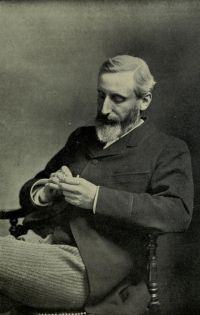
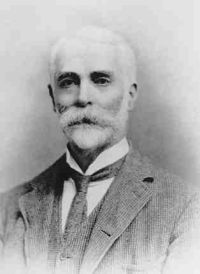 Bernard Bosanquet,
The Philosophical Theory of the State
Bernard Bosanquet,
The Philosophical Theory of the State
“ It consists of endeavours to adjust help to needs, which endeavours are themselves unadjusted to each other. Thus, precisely as in the theoretical progress, the unadjustment of adjustments brings out ever new contradictions which demand readjustment. ”
Evelyn Dewey, Schools of to-morrow
“ Thus put, the problem may seem to be so vast and complicated as to be impossible of solution. But we must remember that we are dealing with a problem of readjustment, not of original creation. It will take a long time to complete the readjustment which will be brought about gradually. ”
 Arnold Bennett,
Books and Persons; Being Comments on a Past Epoch…
Arnold Bennett,
Books and Persons; Being Comments on a Past Epoch…
“ In the process of readjustment many people will temporarily suffer, and a few people will be annihilated. But things are what they are, and the consequences of them will be what they will be. Why, therefore, should we deceive ourselves? ”
 James Harvey Robinson,
The Mind in the Making: The Relation of Intelligence to Social Reform
James Harvey Robinson,
The Mind in the Making: The Relation of Intelligence to Social Reform
“ Principles unintelligently urged make a great deal of trouble in the free consideration of social readjustment, for they are frequently as recalcitrant and obscurantist as the primitive taboo, and are really scarcely more than an excuse for refusing to reconsider one's convictions and conduct. ”
 William Isaac Thomas,
The Unadjusted Girl, With Cases and Standpoint for Behavior Analysis
William Isaac Thomas,
The Unadjusted Girl, With Cases and Standpoint for Behavior Analysis
“ They meet the individual at the point of some crisis, some experience or breakdown calling for readjustment, but from this point they work backward into the history of the case and follow its development into the future. ”
Samuel Butler, Luck, or Cunning, as the Main Means of Organic Modification
“ On the introduction of a foe so inimical to many of our pre-existing ideas the balance of power among them was upset, and a readjustment became necessary, which is still far from having attained the next settlement that seems likely to be reasonably permanent. ”
Jose P. Laurel, Inaugural Address
“ We shall encounter difficulties greater than any we have ever faced in our national history, We shall have to adapt ourselves to the strange stimuli of a new environment and undergo the travails of constrant adjustment and readjustment. ”
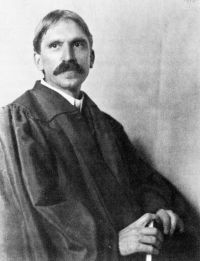 John Dewey,
Democracy and Education
(1916)
John Dewey,
Democracy and Education
(1916)
“ The wider or larger self which means inclusion instead of denial of relationships is identical with a self which enlarges in order to assume previously unforeseen ties. In such crises of readjustment—and the crisis may be slight as well as great—there may be a transitional conflict of 'principle' with 'interest.' It is the nature of a habit to involve ease in the accustomed line of activity. It is the nature of a readjusting of habit to involve an effort which is disagreeable—something to which a man has deliberately to hold himself. ”
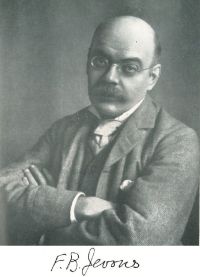
“ The consequence of that adjustment, when complete, will be that actions which are right—that is, are beneficial to the individual and to society—will always be pleasurable, not only in their consequences, but also immediately and in themselves. ”
 Woodrow Wilson,
When a Man Comes to Himself
Woodrow Wilson,
When a Man Comes to Himself
“ The practicability of every reform is determined absolutely and always by “the circumstances of the case,” and only those who put themselves into the midst of affairs, either by action or by observation, can know what those circumstances are or perceive what they signify. ”
 Franklin Henry Giddings,
Popular Science Monthly
(1909)
Franklin Henry Giddings,
Popular Science Monthly
(1909)
“ Here a word must be said about the subjective aspect of society, which, in its objective aspect, as we have seen, is merely the struggle and process of adjustment. What is the relation of adjustment to sympathy and to understanding, to communication and to concerted purpose, to the evolution of a social constraint through which the community controls and shapes the individual, to cooperation and to social organization? ”
William Thomas Hamilton, The duties of masters and slaves respectively (1845)
“ Could you, to-morrow, reduce all men to one uniform and perfect level, in condition, in property, and in privileges, not a week would pass away without producing changes utterly destructive of perfect equality. ”
Mary G. Ware, The elements of character
“ Where the mind is absorbed in some one object of reform, this constant devotion to duty is almost, if not quite, impossible. The mind becomes so warped in one direction that it loses the habit, and almost loses the power, of turning in any other. Hence we rarely hear the word duty from the lips of the reformer. ”
 Julia Ward Howe,
Is Polite Society Polite? and Other Essays
Julia Ward Howe,
Is Polite Society Polite? and Other Essays
“ I wish to speak here of the so-called rudeness of reform; and to say that I think we should call this roughness rather than rudeness. A true reformer honors human nature by recognizing in it a higher power than is shown in its average action. ”
Boyd Henry Bode, Creative Intelligence: Essays in the Pragmatic Attitude
“ But before the crucial question of justice which divides modern society, namely, whether we shall lay emphasis upon adjustment of rewards to previous abilities, habits, possessions, character, or shall lay stress upon needs, and the possibility of bringing about a greater measure of equality, the doctrine which would find its standard in an a priori reason is helpless. ”
James Bonar, Malthus and his work (1885)
“ The abstract principle of increase getting more, and concrete humanity less, than justice, the next step was, naturally, to deny the possibility of permanent improvement in this world, and to regard every partial improvement as a labour of Sisyphus. ”
Frank Parker Stockbridge, Measure Your Mind: The Mentimeter and How to Use It
“ The fact that people are so different makes possible an adjustment whereby the ability and interest of the labourer may be in proportion to the difficulty of the undertaking to which he is assigned.Perhaps nothing makes a larger contribution to the happiness and contentment of the world than this adjustment of the individual to his vocation, and yet the problem of securing such an adjustment is complicated by an enormous number of practical difficulties. ”
Franklin Henry Giddings,
Popular Science Monthly
(1909)
“ And, since any failure of adjustment may be as fatal as non-adaptation or starvation, there will be a struggle, at first perhaps unconscious, but in course of time becoming conscious, to maintain adjustment and to perfect it. This struggle for adjustment is the beginning of social life and is the differentiating mark of all true social phenomena. ”
 Charles Dudley Warner,
What Is Your Culture to Me?
Charles Dudley Warner,
What Is Your Culture to Me?
“ We seek other conditions, by reason we do not understand the use of our own; and go out of ourselves, because we know not how there to reside."But nevertheless it becomes a necessity for us to understand the wishes of those who demand a change of condition, and it is necessary that they should understand the compensations as well as the limitations of every condition. ”
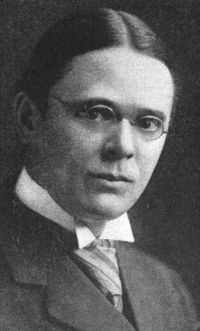 Roscoe Pound,
An Introduction to the Philosophy of Law
Roscoe Pound,
An Introduction to the Philosophy of Law
“ Third, we shall see in these theories a picture of a system of ordering human conduct and adjusting human relations resting upon the ultimate basis and derived therefrom by the absolute process. In other words, they all picture, not merely an ordering of human conduct and adjustment of human relations, which we have actually given, but something more which we should like to have, namely, a doing of these things in a fixed, absolutely predetermined way, excluding all merely individual feelings or desires of those by whom the ordering and adjustment are carried out. ”
 Herbert Spencer,
Popular Science Monthly
(1884)
Herbert Spencer,
Popular Science Monthly
(1884)
“ To which there comes the undeniable corollary that every law which serves to alter men's modes of action—compelling, or restraining, or aiding, in new ways—so affects them as to cause in course of time an adjusted nature. ”
William A. Smith, Lectures on the Philosophy and Practice of Slavery
“ Hence, in the ratio in which the pure intelligence is unfolded, and feelings of obligation arise, or conscience is developed, and becomes the practical rule of action, the individual acquires the right of self-control, and only in that ratio. ”
 John Henry Newman,
An Essay in Aid of a Grammar of Assent
John Henry Newman,
An Essay in Aid of a Grammar of Assent
“ For this law of progress is carried out by means of the acquisition of knowledge, of which inference and assent are the immediate instruments. Supposing, then, the advancement of our nature, both in ourselves individually and as regards the human family, is, to every one of us in his place, a sacred duty, it follows that that duty is intimately bound up with the right use of these two main instruments of fulfilling it. ”
Baron Edward Bulwer Lytton Lytton, What Will He Do with It? — Complete
“ The scales of earthly justice are poised in their quivering equilibrium, not by huge hundred-weights, but by infinitesimal grains, needing the most wary caution, the most considerate patience, the most delicate touch, to arrange or readjust. Few of our errors, national or individual, come from the design to be unjust ”
J. J. Atkinson, Social Origins and Primal Law
“ Now we have surmised that at this stage our subject has been modified, both physically and mentally, to a certain extent in approach to the human type, and there is precisely one special modification which would have been of paramount importance in view of the problem of advance in progress. ”
 John Stuart Mill,
On Liberty
(1869)
John Stuart Mill,
On Liberty
(1869)
“ He who chooses his plan for himself, employs all his faculties. He must use observation to see, reasoning and judgment to foresee, activity to gather materials for decision, discrimination to decide, and when he has decided, firmness and self-control to hold to his deliberate decision. And these qualities he requires and exercises exactly in proportion as the part of his conduct which he determines according to his own judgment and feelings is a large one. ”
 Hypatia Bradlaugh Bonner,
Charles Bradlaugh: a Record of His Life and Work…
Hypatia Bradlaugh Bonner,
Charles Bradlaugh: a Record of His Life and Work…
“ Each step in the Reform movement, whether theological, social, or political, is educational in its effects even beyond the circle in which the step is taken. My advice would be: Seek justice; but refuse no point which may be conceded, for each concession gives you additional means and strength to enforce your claim. ”
William Isaac Thomas,
The American Journal of Sociology…
(1896)
“ The substitution of action based on knowledge for action based on feeling is made possible in the individual and in society by the development of higher centers of control and the power of choice through inhibition and legislation. ”
William Jackson Elmslie, Seedtime in Kashmir: A Memoir of William Jackson Elmslie
“ Your responsibility is increased, and that not to such an extent as to crush you under its weight. It's of great consequence, I consider it, to have one's responsibility thus gradually increased. It fits one for a farther increase, when he has successfully carried his previous burden. ”
H. Laing Gordon, Sir James Young Simpson and Chloroform…
“ The change was so great as to be impracticable in the eyes of most men; he, on the other hand, contended that it was to be of incalculable benefit to humanity, and, therefore, no difficulty, however great, should be allowed to stand in the way. ”
William James, The Principles of Psychology, Volume 1…
“ All progress in the social Self is the substitution of higher tribunals for lower; this ideal tribunal is the highest; and most men, either continually or occasionally, carry a reference to it in their breast. ”
 Rebecca Harding Davis,
Life in the Iron-Mills; Or, The Korl Woman
Rebecca Harding Davis,
Life in the Iron-Mills; Or, The Korl Woman
“ Reform is born of need, not pity. ”
 William Graham Sumner,
Folkways
William Graham Sumner,
Folkways
“ The phases seem to follow each other by an inherent necessity, and as if independent of the reason and will of the men affected, but the changes are always produced by a strain towards better adjustment of the mores to conditions and interests of the society, or of the controlling elements in it. ”
 Ada S. Ballin,
Science of Dress
(1885)
Ada S. Ballin,
Science of Dress
(1885)
“ Obstacles are placed in the way of every alteration, it is true; but again to quote the words of one of the greatest practical physiologists that has ever lived, "surely no question of mere (pecuniary) gain to any or to every class ought to be allowed to stand for ever in the way, when the lives and happiness of multitudes of our fellow-creatures and the tranquillity and real prosperity of the country are at stake. ”
J. H. Kurtz, Church History (Volumes 1-3)
“ Adherence to rigid order, and unconditional obedience to reasonable demands, and a mild discipline, with strict control, and a regular system by which one was set to watch another, were the means used for arousing to the utmost a spirit of emulation and giving a sharp spur to ambition. ”
Peter Vivian Daniel, Barnard v. Adams — Dissent
“ And it is, as far as I have been able to learn, the practice of all countries.' The same will, the same positive action, the same purpose, and, it may be added, the same predicament or position of the actors, must exist in each class of cases. There must be intent and act, prompted by, and tending to, a practicable, or at least a probable result, and not mere endurance or submission to uncontrollable necessity in either case. ”
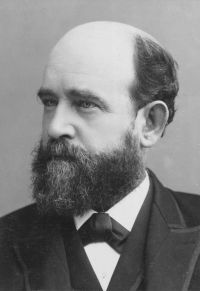 Henry George,
Progress and Poverty (George)…
(1879)
Henry George,
Progress and Poverty (George)…
(1879)
“ And if this be true of the physical constitution of man, in how much higher degree is it true of his mental constitution? All our physical parts we bring with us into the world; but the mind develops afterwards. ”
 Janet Erskine Stuart,
The Education of Catholic Girls
Janet Erskine Stuart,
The Education of Catholic Girls
“ And it may well be that there is something to be said in favour of modifying them—in fact it must be so, for all human things need at times to be revised and readapted to special and local conditions. ”
 Margaret Fuller,
Life Without and Life Within; or…
Margaret Fuller,
Life Without and Life Within; or…
“ All benevolent persons, whether deeply-thinking on, or deeply-feeling, the woes, difficulties, and dangers of our present social system, are agreed that either great improvements are needed, or a thorough reform. ”
Herbert Spencer,
Popular Science Monthly
(1884)
“ Every theory of education, every discipline, from that of the arithmetician to that of the prize-fighter, every proposed reward for virtue or punishment for vice, implies the belief, embodied in sundry proverbs, that the use or disuse of each faculty, bodily or mental, is followed by an adaptive change in it—loss of power or gain of power according to demand. ”
Chapman Cohen, Determinism or Free-Will?
“ As it grows older, and growth brings with it the power of more fully appreciating the consequence of actions, its responsibility increases in the home, in the school, in business, social, religious, and political circles it is held accountable for its conduct, in proportion as the power of estimating the consequences of actions is assumed. ”
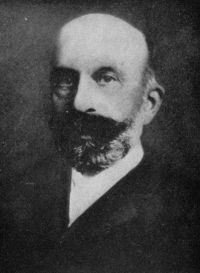 Albion Woodbury Small,
The American Journal of Sociology
(1896)
Albion Woodbury Small,
The American Journal of Sociology
(1896)
“ Adoption of the principles just cited into commanding rank in our standards of social action will assure steady approach to more worthy conditions. The details of progressive adjustment must come from experiments, just as in the case of improvements in printing presses or in dynamos. ”
 Otto Weininger,
Sex & Character
(1906)
Otto Weininger,
Sex & Character
(1906)
“ From what quarter are we to seek help in our problem? The old doctrine is insufficient, and yet we cannot make shift without it. If the received ideas do not suffice, it must be our task to seek out new and better guides. ”
J. Giles Powell, The narrative of a voyage to the Swan River… (1831)
“ However honest and faithful in their engagements they may be, they will by no means submit to any alterations of the system to which they have been brought up without great trouble, altercation, and complaints of the injustice with which they are treated. ”
 George Birkbeck Norman Hill,
The Life of Sir Rowland Hill and the History of Penny Postage…
George Birkbeck Norman Hill,
The Life of Sir Rowland Hill and the History of Penny Postage…
“ In every case he would be asking, ‘If we were to begin the world afresh, how should we proceed?’ He would always consider what is the best thing to be done, and next how can it be done irrespectively of everything conventional. ”
 Scott Nearing,
Civilization and Beyond: Learning from History
(1975)
Scott Nearing,
Civilization and Beyond: Learning from History
(1975)
“ The success or failure of this effort to assure individual adjustment to the social norm and conformity to its practices varies with the prosilitizing enthusiasm of the society and with the ration of adaptability and self-consciousness of its individual members. ”
