“ In my way, as in a glass, darkly, I do strive my best to believe, though perhaps my belief is hardly more in its way than Ernest Le Breton’s unbelieving. I do want to think that this great universe we see around us isn’t all a mistake and an abortion. I want to find a mind and an order and a purpose in it; and, perhaps because I want it, I make myself believe that I have really found it. In that hope and belief, with the ultimate object of helping on whatever is best and truest in the world, I took orders. But I feel now that it was an error for me. I’m not the right man to make a parson. ”
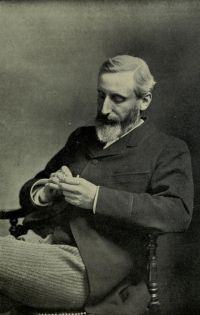
Grant Allen
Summary
Grant Allen’s Philistia examines the tensions between personal conviction and societal expectations, tracing the experiences of characters such as Ernest Le Breton, Edie, and Lady Hilda as they confront moral dilemmas and social hierarchies.
The novel explores themes of class, love, and integrity, as evidenced by its depiction of strained family relationships and the conflict between personal ambitions and strict social conventions. Through its detailed portrayal of human agency and ethical challenges, Philistia highlights the difficulty of aligning personal truth with the limitations imposed by one’s social environment.
Quotes from Philistia (Grant Allen)
“ Whenever I think of you, dear Father—you, who are so infinitely nobler, and better, and truer, and more really a gentleman than any other than I ever knew in my life—whenever I think of you, coming secretly up to Oxford as if you were ashamed of yourself, and visiting your own son by stealth in his rooms in college as if you were a dun coming to ask him for money, instead of the person whom he delights to honour—whenever I think of it, Father, it makes my cheeks burn with shame, and I loathe myself for ever allowing you so to bemean your own frank, true, noble nature. ”
“ Berkeley,’ Lady Hilda said, vehemently, ‘why should the whole world always take it for granted that because a girl happens to be born the daughter of people whose name’s in the peerage, she must necessarily be the slave of the proprieties, devoid of all higher or better instincts? Why should they take it for granted that she’s destitute of any appreciation for any kind of greatness except the kind that’s represented by a million and a quarter in the three per cents., or a great-great-grandfather who fought at the battle of Naseby? Why mayn’t she have a spark of originality? ”
