“ Anger not the gods. Don’t ruin Boupari. If the Taboo is not indeed broken, then how dare we break it? They are gods. Fear their vengeance. They are, indeed, terrible. See what happened to us when they merely ate of the storm-apple! What might not happen if we were to break taboo without due cause and kill them? ”
Taboo
Definition and stakes
A taboo is a societal or cultural prohibition rooted in revulsion, holiness, or exclusivity, often enforced through norms or legislation. Sigmund Freud associated universal taboos, such as incest, with the moral underpinnings of civilization, while Grant Allen’s The Great Taboo dramatized the conflict between divine punishment and human resistance.
James George Frazer connected taboo to religious convictions, portraying it as a manifestation of divine intent, and Wilhelm Wundt highlighted its function in demarcating the sacred from the profane. These viewpoints illustrate taboo as a framework through which cultures navigate ethics, authority, and self-identity, reflecting shared anxieties and the imperative for communal unity.
Quotes about “taboo”
“ If you have to submit to the disadvantages of taboo, you may as well claim its advantages as well. “The King of Fire and the King of Water crossed my taboo line. Why shouldn’t I cross equally the King of the Birds’, then?” “So you might—as a rule,” the Shadow answered with promptitude. “You are both gods. Your taboos do not cross. You may visit each other. You may transgress one another’s lines without danger of falling dead on the ground as common men would do if they broke taboo-lines. ”
 James George Frazer,
The Belief in Immortality and the Worship of the Dead…
James George Frazer,
The Belief in Immortality and the Worship of the Dead…
“ The consideration of taboo introduces us to the subject of religion; for, on the one hand, the foregoing evidence tends to establish a connexion between the institution of taboo and the doctrine of the human soul, and on the other hand some of our best authorities on the Marquesans have stated that the taboo was believed to be an expression of the will of the gods conveyed to the people through the mouth of a priest. ”
James George Frazer,
Psyche's task
(1913)
“ Thus on the taboo were grafted the golden fruits of law and morality, while the parent stem dwindled slowly into the sour crabs and empty husks of popular superstition on which the swine of modern society are still content to feed. ”
“ A savage, even if he be a god, is always superstitious. Could it be that his own time was, indeed, drawing nigh? That he, who had remorselessly killed and eaten so many hundreds of human victims, was himself to fall a prey to some more successful competitor? Had the white-faced stranger, the King of the Rain, really learned the secrets of the Great Taboo from the Soul of all dead parrots? Did that mysterious bird speak the tongue of these new fire-bearing Korongs, whose doom was fixed for the approaching solstice? Tu-Kila-Kila wondered and doubted. ”
James George Frazer,
The Golden Bough
(1922)
“ The Meaning of Taboo.—Thus in primitive society the rules of ceremonial purity observed by divine kings, chiefs, and priests agree in many respects with the rules observed by homicides, mourners, women in childbed, girls at puberty, hunters and fishermen, and so on. To us these various classes of persons appear to differ totally in character and condition; some of them we should call holy, others we might pronounce unclean and polluted. But the savage makes no such moral distinction between them ”
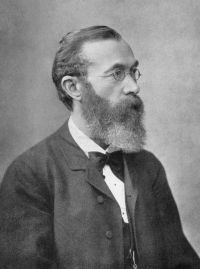 Wilhelm Max Wundt,
Elements of Folk Psychology
Wilhelm Max Wundt,
Elements of Folk Psychology
“ The word 'totem' is as yet relatively uncommon in literature, with the exception of books on ethnology and folk psychology; the word 'taboo,' on the other hand, is much in use. A thing is called taboo when it may not be touched, or when it must be avoided for some reason, whether because of its peculiar sanctity or contrariwise because its harmful influence renders it 'impure,' defiling every one who comes into contact with it. ”
 Sigmund Freud,
Totem and Taboo — Chapter II.Taboo and the Ambivalence of Emotions
(1913)
Sigmund Freud,
Totem and Taboo — Chapter II.Taboo and the Ambivalence of Emotions
(1913)
“ Taboo is itself an ambivalent word and by way of supplement, we may add that the established meaning of this word might of itself have allowed us to guess what we have found as the result of extensive investigation, namely, that the taboo prohibition is to be explained as the result of an emotional ambivalence. ”
James George Frazer,
The Golden Bough: A Study in Magic and Religion…
“ To the illustrations of these general principles which have been already given I shall now add some more, drawing my examples, first, from the class of tabooed things, and, second, from the class of tabooed words; for in the opinion of the savage both things and words may, like persons, be charged or electrified, either temporarily or permanently, with the mysterious virtue of taboo, and may therefore require to be banished for a longer or shorter time from the familiar usage of common life. ”
 Northcote Whitridge Thomas,
1911 Encyclopædia Britannica
(1911)
Northcote Whitridge Thomas,
1911 Encyclopædia Britannica
(1911)
“ Developments of Taboo.—It would be remarkable if a feature which has taken such deep root in the custom and belief of savage and barbarous peoples did not leave a marked impress on the faiths of higher cultures. lust as the gods have become moral pafi passu with mankind, so the ceremonially clean has become the physically and morally clean, the pure has become the moral, and taboo has changed its name to holiness. ”
James George Frazer,
The Golden Bough
(1922)
“ The positive precepts are charms: the negative precepts are taboos. In fact the whole doctrine of taboo, or at all events a large part of it, would seem to be only a special application of sympathetic magic, with its two great laws of similarity and contact. Though these laws are certainly not formulated in so many words nor even conceived in the abstract by the savage, they are nevertheless implicitly believed by him to regulate the course of nature quite independently of human will. ”
Phyllis Blanchard, Taboo and Genetics
“ The dual nature of taboo as the avoidance of both the sacred and the unclean is noted by authorities on the subject who differ in other respects as to the definition of taboo, such as in the relation of taboo to the magical ceremonies by which man undertook to mould his environment to his wishes. ”
“ The warriors hung back with doubtful eyes for a moment. Then they spoke with one accord, “Tu-Kila-Kila shall decide. Tu-Kila-Kila! Tu-Kila-Kila! If the great god says the Taboo holds good, we will not hurt or offend the strangers. But if the great god says the Taboo is broken, and we are all without sin—then, Korong! Korong! we will kill them! We will eat them!” ”
Sigmund Freud,
Totem and Taboo — Chapter II.Taboo and the Ambivalence of Emotions
(1913)
“ We know, without understanding it, that whoever does what is prohibited and violates the taboo, becomes himself taboo. But how can we connect this fact with the other, namely that the taboo adheres not only to persons who have done what is prohibited but also to persons who are in exceptional circumstances, to these circumstances themselves, and to impersonal things? ”
James George Frazer,
The Golden Bough: A Study in Magic and Religion…
“ It treats of the principles of taboo in their special application to sacred personages, such as kings and priests, who are the proper theme of the book. It does not profess to handle the subject as a whole, to pursue it into all its ramifications, to trace the manifold influences which systems of this sort have exerted in moulding the multitudinous forms of human society. ”
“ It behooves us to be very careful how we deal with gods. Our people will stand round your precinct in a row, and guard you with their spears. You shall not cross the taboo line to them, nor they to you: all shall be neutral. Food shall be laid by the line, as always, morn, noon, and night; and your Shadows shall take it in; but you shall not come out. Neither shall you bury the body of Lavita, the son of Sami. Till the canoe comes back it shall lie in the sun and rot there. ”
Edwin Sidney Hartland, The Science of Fairy Tales
“ In some traditions, the woman's caprice, or the fulfilment of her fate, is deemed enough for this purpose; but in the most developed stories it is caused by the breach of a taboo. Taboo is a word adopted from the Polynesian languages, signifying, first, something set apart, thence holy and inviolable, and lastly something simply forbidden. ”
James George Frazer,
The Golden Bough
(1922)
“ In short, those negative precepts which we call taboo are just as vain and futile as those positive precepts which we call sorcery. The two things are merely opposite sides or poles of one great disastrous fallacy, a mistaken conception of the association of ideas. Of that fallacy, sorcery is the positive, and taboo the negative pole. If we give the general name of magic to the whole erroneous system, both theoretical and practical, then taboo may be defined as the negative side of practical magic. ”
 Boris Sidis,
The Source and Aim of Human Progress…
(1919)
Boris Sidis,
The Source and Aim of Human Progress…
(1919)
“ Society enmeshes the individual in a close and strongly woven network of taboos, customs, commandments, and traditions, all maintained by force and fear.Fear of the outraged sense of the community inhibits even the very thought of breach of a taboo or violation of custom. The taboo is based on some subconscious fear of some unknown force, or some vague apprehension of a spirit power avenging the awful transgression. The taboo is essentially the fear of the unseen, of the unknown. "A taboo is anything that one must not do lest ill-luck befall. ”
 Edward Carpenter,
Pagan and Christian Creeds: Their Origin and Meaning
Edward Carpenter,
Pagan and Christian Creeds: Their Origin and Meaning
“ It would be seen that some taboos, like those of CONTACT (say with a menstruous woman, or a mother-in-law, or a lightning-struck tree) had an obvious basis of observation, justifiable but very crude; while others, like the taboo against harming an enemy who had contracted blood-friendship with one of your own tribe, or against giving decent burial to a murderer, were equally rough and rude expressions or indications of the growing moral sentiment of mankind. ”
Sigmund Freud,
Totem and Taboo — Chapter II.Taboo and the Ambivalence of Emotions
(1913)
“ But if we grant the testimony of our conscience the importance it claims, then the prohibition—the taboo as well as our moral prohibitions—becomes superfluous, while the existence of a conscience, in turn, remains unexplained and the connection between conscience, taboo and neurosis disappears. ”
“ Hence they take great care and woorship of their gods, surrounding them with many rules which they call Taboo, and restricting them as to what they shall eat, and what drink, and wherewithal they shall seemly clothe themselves. ”
“ But it isn’t so easy to make haste when all your movements are impeded and hampered by endless taboos and a minutely annoying ritual. Before Tu-Kila-Kila could get himself under way, sacred umbrella, tom-toms, and all, it was necessary for the King of Fire and the King of Water to make taboo on an elaborate scale with their respective elements; and so by the time the high god had reached M. Jules Peyron’s garden, Felix Thurstan had already some time since returned to Muriel’s hut and his own quarters. ”
Edward Carpenter,
Pagan and Christian Creeds: Their Origin and Meaning
“ It is true indeed that a taboo—in order to be a proper taboo—must not rest in the general mind on argument or reason. It may have had good sense in the past or even an underlying good sense in the present, but its foundation must rest on something beyond. ”
 Hendrik Willem Van Loon,
Tolerance
Hendrik Willem Van Loon,
Tolerance
“ Whether the taboo was an invention of the priests or the priesthood was created to maintain the taboo is a problem which had not yet been solved. As tradition is much older than religion, it seems more than likely that taboos existed long before the world had heard of sorcerers and witch-doctors. But as soon as the latter had made their appearance, they became the staunch supporters of the idea of taboo and used it with such great virtuosity that the taboo became the “verboten” sign of prehistoric ages. ”
Sigmund Freud,
Totem and Taboo — Chapter II.Taboo and the Ambivalence of Emotions
(1913)
“ In accordance with the general sense of the word we understand by taboo every prohibition laid down in customs or manners or in expressly formulated laws, not to touch an object or to take it for one’s own use, or to make use of certain proscribed words . ”
Portal:Anonymous texts, The Urantia Book (1955)
“ As the savage mind evolved to that point where it envisaged both good and bad spirits, and when the taboo received the solemn sanction of evolving religion, the stage was all set for the appearance of the new conception of sin. ”
Sigmund Freud,
Totem and Taboo — Chapter II.Taboo and the Ambivalence of Emotions
(1913)
“ Persons or things which are regarded as taboo may be compared to objects charged with electricity; they are the seat of tremendous power which is transmissible by contact, and may be liberated with destructive effect if the organisms which provoke its discharge are too weak to resist it; the result of a violation of a taboo depends partly on the strength of the magical influence inherent in the taboo object or person, partly on the strength of the opposing mana of the violator of the taboo. ”
Sigmund Freud,
Totem and Taboo — Chapter II.Taboo and the Ambivalence of Emotions
(1913)
“ Let us now summarize what understanding we have gained of taboo through its comparison with the compulsive prohibition of the neurotic. Taboo is a very primitive prohibition imposed from without (by an authority) and directed against the strongest desires of man. The desire to violate it continues in the unconscious; persons who obey the taboo have an ambivalent feeling toward what is affected by the taboo. The magic power attributed to taboo goes back to its ability to lead man into temptation ”
Chapman Cohen, Religion & Sex: Studies in the Pathology of Religious Development
“ The primary meaning of 'taboo,' a Polynesian word, is something that is set aside or forbidden. The field covered by this word among savage and semi-savage races is, as Robertson Smith points out, "very wide, for there is no part of life in which the savage does not feel himself surrounded by mysterious agencies and recognise the need of walking warily." [73] Anything may thus become the object of a 'taboo.' Weapons, food, animals, places, special relations of one person to another at certain times and under certain conditions. ”
Allan Menzies, History of Religion
“ These are examples of taboo where the inviolable object or person belongs to a good god, and where the taboo corresponds exactly with the rule of holiness.4 But instances are still more numerous among savages of taboo attaching to an object because it is connected with a malignant power. The savage is surrounded on every side by such prohibitions; there is danger at every step that he may touch on what is forbidden to him, and draw down on himself unforeseen penalties. ”
James George Frazer,
The Golden Bough
(1922)
“ And just as the desired consequence is not really effected by the observance of a magical ceremony, so the dreaded consequence does not really result from the violation of a taboo. If the supposed evil necessarily followed a breach of taboo, the taboo would not be a taboo but a precept of morality or common sense. It is not a taboo to say, “Do not put your hand in the fire”; it is a rule of common sense, because the forbidden action entails a real, not an imaginary evil. ”
Sigmund Freud,
Totem and Taboo — Chapter II.Taboo and the Ambivalence of Emotions
(1913)
“ Only one thing, namely, the propensity to arouse the ambivalence of man and to tempt him to violate the prohibition. An individual who has violated a taboo becomes himself taboo because he has the dangerous property of tempting others to follow his example. He arouses envy; why should he be allowed to do what is prohibited to others? ”
Sigmund Freud,
Totem and Taboo
“ The animal, person or place on which there is a taboo is demonic, that is, not sacred, and therefore not yet, in the later sense, unclean. The expression taboo is particularly suitable for this undifferentiated and intermediate meaning of the demonic, in the sense of something which may not be touched, since it emphasizes a characteristic which finally adheres both to what is sacred and to the unclean, namely, the dread of contact. ”
James George Frazer,
Encyclopædia Britannica, Ninth Edition
(1888)
“ The strictness with which the taboo was observed depended largely on the influence of the person who imposed it; if he was a great chief it would not be broken ; but a powerful man often set at nought the taboo of an inferior. General and particular taboos.A taboo might be general or particular, permanent or temporary. A general taboo applied, e.g., to a whole class of animals; a particular taboo was confined to one or more individuals of the class. ”
Sigmund Freud,
Totem and Taboo — Chapter II.Taboo and the Ambivalence of Emotions
(1913)
“ But a person may become permanently or temporarily taboo without having violated any taboos, for the simple reason that he is in a condition which has the property of inciting the forbidden desires of others and of awakening the ambivalent conflict in them. ”
Sigmund Freud,
Totem and Taboo — Chapter II.Taboo and the Ambivalence of Emotions
(1913)
“ The taboo of a king is too strong for his subject because the social difference between them is too great. But a minister, for example, can become the harmless mediator between them. Translated from the language of taboo into the language of normal psychology this means: the subject who shrinks from the tremendous temptation which contact with the king creates for him can brook the intercourse of an official, whom he does not have to envy so much and whose position perhaps seems attainable to him. ”
Related terms
Authors who wrote about “taboo”
Sigmund FreudJames George FrazerPhyllis BlanchardNorthcote Whitridge Thomas Crawford Howell ToyEdwin Sidney Hartland
 Grant AllenAllan MenziesEdward CarpenterChapman CohenPortal:Anonymous textsWilhelm Max WundtBoris SidisHendrik Willem Van Loon
 William Henry Giles Kingston
 Joseph Deniker
 S. N. HaleoleGeorge L. Craik
 Ethel Watts Mumford
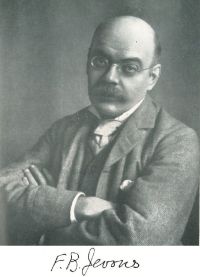 F. B. Jevons