“ The sorcerer answered: “I want to find out whether you know anything about those three doves that used to bathe in my brother’s pond.”“Of course I know about them, for I have been driving them before me. They are bathing in the Red Sea now.”The sorcerer said: “You must take up this man and carry him as far as their gold-roofed palace,” and he took the lad aside and whispered in his ear:“When the devil asks you how quick he is to take you, if he says: ‘As quickly as the wind blows?’ say ‘No’; and if he says, ‘As quickly as the step goes?’ say ‘No’ again. ”
Sorcerer
Definition and stakes
The sorcerer, a character class in Dungeons & Dragons, represents an inherent mastery of arcane powers, differing from the learned magic practiced by wizards. Authors such as James George Frazer portray sorcerers as figures of fear, wielding perilous abilities, while Charles de Coster describes them as individuals who deliberately use "devilish arts.
" In folklore, sorcerers emerge as mysterious figures of destiny, influencing spirits or making pacts with the supernatural. These diverse depictions emphasize the theme’s duality: a wielder of concealed forces and an emblem of arcane uncertainty, connecting gaming systems with mythic heritage.
Quotes about “sorcerer”
Lacy Collison-Morley, Greek and Roman Ghost Stories
“ The Declamation ends, like most Roman speeches, with an appeal: in this case to the sorcerer and the husband to remove the spells; especially to the sorcerer, who has power to torture the gods above and the spirits of the dead; who, by the terror of his midnight cries, can move the deepest caves, can shake the very foundations of the earth. "You are able both to call up the spirits that serve you and to act as their cruel and ruthless gaoler. ”
Charles de Coster, The Legend of the Glorious Adventures of Tyl Ulenspiegel in the land of Flanders and elsewhere
“ A sorcerer, I would remind you, is one who knowingly employs a devilish art, or devilish arts, for the attainment of a certain object. Well, these two persons, the man and the woman, I find to be sorcerers both in intention and in fact; the man because, as the evidence states, he gave to this woman the balm of the Witches’ Sabbath, and made his visage like unto Lucifer so as to obtain money from her and the satisfaction of his wanton desires. And the woman also I find to be a sorceress because she submitted herself to the man, taking him for a devil and abandoning herself to his will. ”

Related terms
Authors who wrote about “sorcerer”
 W. F. KirbyJames HutsonC. A. W. MoncktonSir Edgar MacCulloch
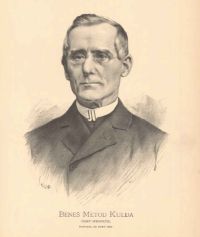 Beneš Metod Kulda
 James George FrazerW.H.R.Rivers
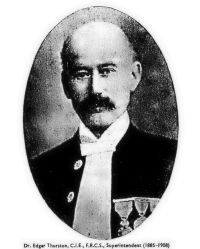 Edgar ThurstonDorothy ScarboroughCarveth Read
 Charles Reade
 Walter Savage Landor
 Marah Ellis RyanCharles de Coster
 A. H. SayceLacy Collison-MorleyJohn M. Taylor
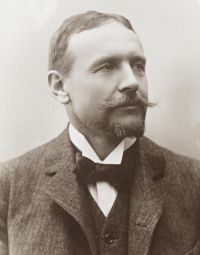 Carl Lumholtz
 Edward Berdoe
 Katharine Pyle
Related articles
The poisoned arrow: Where science, secrecy, and sorcery meet
The lethality of ancient arrow poison was not purely chemical, but stemmed from a carefully guarded monopoly of knowledge, where specialized sorcerers fused practical toxicology with incantations and spiritual authority. This systematic blend of empirical observation and ritual defined an early form of scientific thought.
The shift from magic to gods: Despair and the intellectual history of belief
The empirical failure of homoeopathic magic, built on principles of coercion and the use of effigies, created an intellectual vacuum that was eventually filled by the advent of gods and religious supplication. This painful transition from aspiring master to dependent subject paved the way for the rational control promised by science.
