Summary

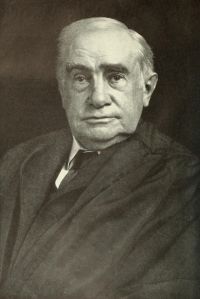
Portrait of Henry Billings Brown Henry Billings Brown Walter v. Northeastern Railroad Company…

In short, the rule applicable to several plaintiffs having separate claims, that each must represent an amount sufficient to give the court jurisdiction, is equally applicable to several liabilities of different defendants to the same plaintiff. The disposition we have made of this question renders it unnecessary to consider the others.
Source: Wikisource

Portrait of Henry Billings Brown Henry Billings Brown Walter v. Northeastern Railroad Company…

We think not. It is well settled in this court that when two or more plaintiffs, having several interests, unite, for the convenience of litigation, in a single suit, it can only be sustained in the court of original jurisdiction, or on appeal in this court, as to those whose claims exceed the jurisdictional amount, and that, when two or more defendants are sued by the same plaintiff in one suit, the test of jurisdiction is the joint or several character of the liability to the plaintiff.
Source: Wikisource

Portrait of Henry Billings Brown Henry Billings Brown Walter v. Northeastern Railroad Company…

In short, the amount in dispute in each county is not only less than $2,000, but is compounded of a state, school, and county tax, most of which is collected and paid out by the county authorities for local purposes.
Under these circumstances, it is entirely clear that, had these taxes been paid under protest, and the plaintiff had sought to recover them back, it would have been obliged to bring separate actions in each county. As the amount recoverable from each county would be different, on joint judgment could possibly be rendered.
Source: Wikisource

Get perspective with Kwize: daily news enlightened by great literature