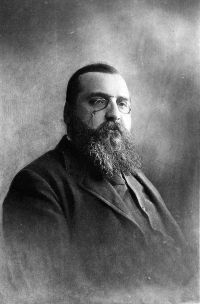
Henry Morse Stephens

Henry Morse Stephens

Summary

Portrait of Henry Morse Stephens Henry Morse Stephens Encyclopædia Britannica, Ninth Edition (1888)

Turenne's four campaigns in Germany, which largely contributed to the peace of Westphalia, have always been regarded as models in the art of war. In June 1644 he crossed the Rhine at Breisach, and was marching against the Comte de Mercy, the Imperialist general, who was at Freiburg, when he was superseded by the Due d Enghien, better known by his later title of the Prince de Conde. D Enghien, after fighting the three days battle of Freiburg, left the army again to Turenne, who took Philippsburg and Mainz, and then went into winter quarters.
Source: Wikisource

Portrait of Henry Morse Stephens Henry Morse Stephens Encyclopædia Britannica, Ninth Edition (1888)

But in 1652 he defeated Conde at Gien, and nearly annihilated his army in the battle of the Faubourg St. Antoine. When the troubles of the Fronde were over, Turenne marched upon the frontier, and in several campaigns defeated the Spaniards over and over again, by these victories paving the way for the peace of the Pyrenees (1659) , the natural complement of the peace of Westphalia. In these campaigns he had once more to fight against Conde, general-in-chief of the armies of Spain, and in 1654 he showed his superiority by raising the siege of Arras and driving the Spaniards from their lines.
Source: Wikisource

Get perspective with Kwize: daily news enlightened by great literature