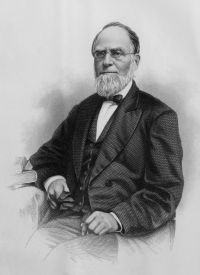
“ Turenne, in defending the frontiers of the Rhine, acquired reputation which has made his name one of the most renowned in military annals. The emperor sent seventy thousand men against him. Turenne had but twenty thousand to meet them. By wonderful combinations, he defeated and dispersed the whole imperial army. It added not a little to the celebrity of Turenne that he had achieved his victory by following his own judgment, in direct opposition to reiterated orders from the minister of war, given in the name of the king. ”
Turenne
Definition and stakes
The theme of “Turenne” has been addressed by authors such as Charlotte M. Yonge, Sophia Beale, John S. C. Abbott, François Guizot and Henry William Fischer. It is often associated with terms like Turin, Italy, France, Alps and river.
Quotes about “Turenne”
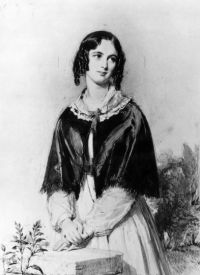 Charlotte M. Yonge,
A Book of Golden Deeds
Charlotte M. Yonge,
A Book of Golden Deeds
“ In the year 1672, Turenne and his army were sent to make war upon the Elector Frederick William of Brandenburg, in Northern Germany. It was in the depth of winter, and the marches through the heavy roads were very trying and wearisome; but the soldiers endured all cheerfully for his sake. Once when they were wading though a deep morass, some of the younger soldiers complained; but the elder ones answered, 'Depend upon it, Turenne is more concerned than we are. At this moment he is thinking how to deliver us. He watches for us while we sleep. He is our father. ”
Sophia Beale, The Churches of Paris, from Clovis to Charles X
“ The body of Turenne did not have much peace after it was routed out of its tomb. Not being royal, it was put aside in a chapel until the Convention should decide its fate; when thinking so great a man a worthy object as a specimen of natural history, and deeming it profitable for students of various "ologies," it was put into a glass case by the side of stuffed birds, bottled snakes, criminal curiosities, and monstrosities. ”
 François Guizot,
A Popular History of France from the Earliest Times…
François Guizot,
A Popular History of France from the Earliest Times…
“ From 1653 to 1657, Turenne, seconded by Marshal La Ferte and sometimes by Cardinal Mazarin in person, constantly kept the Spaniards and the Prince of Conde in check, recovering the places but lately taken from France and relieving the besieged towns; without ever engaging in pitched battles, he almost always had the advantage. ”
Henry William Fischer, Abroad with Mark Twain and Eugene Field (1922)
“ Turenne happened to have been buried among his peers at the feet of Louis XIV. That is the reason why he was dispossessed. Now comes a commercially inclined Frenchman who had read that Turenne had been blessed with exceptionally fine molars. So he breaks all the teeth out of the dead man's jaws and sells them to the highest bidder. I was told there was only one left and I could have it for 100 francs. But I was more interested in my own teeth than in Turenne's and refused to do business with the antiquarian. ”
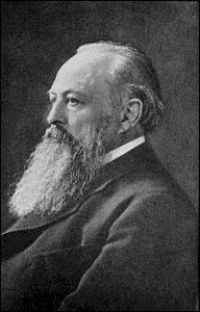 John Acton,
Historical Essays and Studies
(1907)
John Acton,
Historical Essays and Studies
(1907)
“ That vast intrigue had just commenced which was to raise France to the pinnacle of power, and which, by a timely subservience, promised to emancipate the princes of the House of Stuart from the control of Parliament, and from the terrors which had postponed the king's design of reconciliation with Rome. In that conspiracy the motives of religious belief and political ambition were strangely blended. Turenne, who was destined to be the foremost actor in the execution of the design, was a sincere Calvinist. ”
Great Men and Famous Women. Vol…
“ Returning to Paris at the end of the campaign, his journey through France resembled a triumphal progress; such was the popular enthusiasm in his favor. Not less flattering was his reception by the king, whose undeviating regard and (p. 210) confidence, undimmed by jealousy or envy, is creditable alike to the monarch and to his faithful subject. At this time Turenne, it is said, had serious thoughts of retiring to a convent, and was induced only by the earnest remonstrances of the king, and his representations of the critical state of France, to resume his command. ”
Charlotte M. Yonge,
A Book of Golden Deeds
“ Few generals had ever been more loved by their soldiers than the great Viscount de Turenne, who was Marshal of France in the time of Louis XIV. Troops are always proud of a leader who wins victories; but Turenne was far more loved for his generous kindness than for his successes. If he gained a battle, he always wrote in his despatches, 'We succeeded,' so as to give the credit to the rest of the army ”
Sun Tzu, The Art of War (1910)
“ In the tactics of Turenne, deception of the enemy, especially as to the numerical strength of his troops, took a very prominent position. ”
Great Men and Famous Women. Vol…
“ In 1654 he again took the field against his former friend and commander, Condé, who had taken refuge in Spain, and now led a foreign army against his country. The most remarkable operation of the campaign was the raising the siege of Arras, which the Spaniards had invested, according to the most approved fashion of the day, with a strong double line of circumvallation, within which the besieging army was supposed to be securely sheltered against the sallies of the garrison cooped up within, and the efforts of their friends from without. Turenne marched to the relief of the place. ”
Augusta Macgregor Holmes, A Ride on Horseback to Florence Through France and Switzerland…
“ Notwithstanding the unfavourable atmosphere through which we saw it, I prefer Turin as a town to any I have seen in Italy. Its situation is finer than the vaunted one of Florence, with a broader river and more beautiful valley, and hills more wooded surrounding it. One of these the Superga crowns, built in consequence of the vow made by Victor Amedée the Second (when the troops of Louis the Fourteenth besieged his capital) to consecrate a temple to Our Lady, should her aid enable him to force their troops to raise the siege. ”
William Edward Frye, After Waterloo: Reminiscences of European Travel 1815-1819
“ Turin used to be in the olden time one of the most brilliant Courts and cities in Europe, and the most abounding in splendid equipages; now very few are to be seen. When Piedmont was torn from the domination of the House of Savoy and annexed to France, Turin, ceasing to be the capital of a Kingdom, necessarily decayed in splendor, nor did its being made the Chef lieu of a Préfecture of the French Empire make amends for what it once was. The Restoration arrived, but has not been able to reanimate it; an air of dullness pervades the whole city. ”
Henry James, Portraits of places (1883)
“ Turin is not a city to make, in vulgar parlance, a fuss about, and I pay an extravagant tribute to subjective emotion in speaking of it as ancient. But if the place is not so peninsular as Florence and Rome, at least it is more so than New York and Paris; and while the traveller walks about the great arcades and looks at the fourth-rate shop windows, he does not scruple to cultivate a shameless optimism. ”
by Henry James, Italian Hours (1909)
“ Twenty-four hours from Paris to Turin is speed for the times--speed which may content us, at any rate, until expansive Berlin has succeeded in placing itself at thirty-six from Milan.To enter Turin then of a lovely August afternoon was to find a city of arcades, of pink and yellow stucco, of innumerable cafes, of blue-legged officers, of ladies draped in the North-Italian mantilla. An old friend of Italy coming back to her finds an easy waking for dormant memories. Every object is a reminder and every reminder a thrill. ”
Bernard Capes, A rogue's tragedy (1906)
“ A city’s numbers are not to be calculated by one who moves exclusively in its markets. Turin’s population, if regularly distributed over its area, would have shown most of its quarters relatively empty. It looked its best on a moonlight night, when along its canal-like streets the cobble-stones glinted and sparkled like very ripples on water, and the great hulks aligned on either side became shadowy leviathans anchored at rest. ”
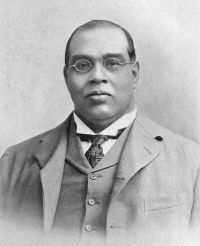 Romesh Chunder Dutt,
Three Years in Europe, 1868 to 1871
(1896)
Romesh Chunder Dutt,
Three Years in Europe, 1868 to 1871
(1896)
“ We then came to Alexandria and then to Asti, the birth place of the poet Alfieri, and it was dark before we reached Turin the capital of Piedmont. Turin seems to be the show town of Italy, and without boasting of natural beauty or the historical association of Florence or of Pisa, Turin is, Turin.so far as modern improvements can make it so, undoubtedly the finest town in Italy. No Italian town can boast of such magnificent and straight streets and avenues, such fine and spacious squares, such noble and imposing buildings. ”
William Edward Frye, After Waterloo: Reminiscences of European Travel 1815-1819
“ In the environs of Turin, the most remarkable buildings are a villa belonging to the King called La Venezia, and the Superga, a magnificent church built on an eminence, five miles distant from Turin. In the Royal Palace, on the Piazza del Castello, there is some superb furniture, but the exterior is simple enough. The country environing Turin forms a plain with gentle undulations, increasing in elevation towards the Alps, which are forty miles distant, and is so stocked with villas, gardens and orchards as to form a very agreeable landscape. ”
Samuel Butler, Cambridge Pieces
“ Turin is a very handsome city, very regularly built, the streets running nearly all parallel to and at right angles with each other; there are no suburbs, and the consequence is that at the end of every street one sees the country; the Alps surround the city like a horseshoe, and hence many of the streets seem actually walled in with a snowy mountain. Nowhere are the Alps seen to greater advantage than from Turin. ”
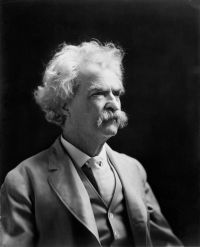
“ Turin is a very fine city. In the matter of roominess it transcends anything that was ever dreamed of before, I fancy. It sits in the midst of a vast dead-level, and one is obliged to imagine that land may be had for the asking, and no taxes to pay, so lavishly do they use it. The streets are extravagantly wide, the paved squares are prodigious, the houses are huge and handsome, and compacted into uniform blocks that stretch away as straight as an arrow, into the distance. ”
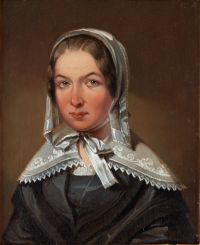 Fredrika Bremer,
Life in the Old World
(1860)
Fredrika Bremer,
Life in the Old World
(1860)
“ Streets cross one another in all directions, at right angles. One sees on all hands, handsome houses and outward prosperity. Beggars slink away ashamed into the twilight. Gens-d'armes march proudly along the streets, which are broad and stiff, multitudinous and long. I have been told that Turin is not a perfectly Italian city, and that it does not possess a perfectly Italian life. Yet one sees bare-headed and bare-footed monks wandering along the streets, also great numbers of priests with broad hats and small legs. ”
John Guy Vassar, Twenty years around the world (1861)
“ The greatest enthusiasm for the Italian cause pervades all Sardinia, and the Piedmont soldiers, being a brave and hardy race from the mountains, are capable of doing duty; but I fear without support from other sources they will not be able to resist the impetuous and large forces of the Austrians, composed of Croats, Slavonians, and Hungarians.Turin is a beautiful city, with a population of some two hundred thousand, and is handsomely situated on the river Po. Its boulevards and promenades in the suburbs are strikingly pretty. The palace of Charles Albert is vast and richly ornamented ”
 Paul de Kock,
The Milkmaid of Montfermeil (Novels of Paul de Kock Volume XX)
Paul de Kock,
The Milkmaid of Montfermeil (Novels of Paul de Kock Volume XX)
“ Auguste and Bertrand arrived at Turin, undelayed by any fresh adventure. They took rooms at a modest hotel, for, before continuing their journey, Auguste desired to make the acquaintance of that pleasant Italian city, where one may fancy oneself in France, and where reigns an attractive mixture of French manners and Italian morals. The ladies of Turin are pretty, agreeable and piquant; in addition to the charm of our Frenchwomen they have more fire in their glance, a more sensuous intonation to the voice, more abandon in their bearing. ”
Count Anthony Hamilton, The Memoirs of Count Grammont…
“ They went to Turin, met with an agreeable reception, and were greatly distinguished at court. Could it be otherwise? They were young and handsome; they had wit at command, and spent their money liberally. In what country will not a man succeed, possessing such advantages? As Turin was at that time the seat of gallantry and of love, two strangers of this description, who were always cheerful, brisk and lively, could not fail to please the ladies of the court. ”
by Henry James, Italian Hours (1909)
“ Relatively speaking, Turin touches a chord; but there is after all no reason in a large collection of shabbily-stuccoed houses, disposed in a rigidly rectangular manner, for passing a day of deep, still gaiety. The only reason, I am afraid, is the old superstition of Italy--that property in the very look of the written word, the evocation of a myriad images, that makes any lover of the arts take Italian satisfactions on easier terms than any others. The written word stands for something that eternally tricks us ”
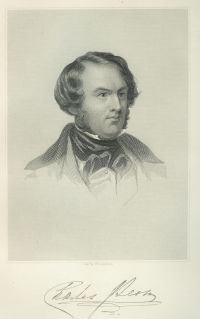 Charles James Lever,
Cornelius O'Dowd Upon Men And Women And Other Things In General
Charles James Lever,
Cornelius O'Dowd Upon Men And Women And Other Things In General
“ Turin is a dreary city for a lounger; even a resident finds that he must serve a seven years’ apprenticeship before he gets any footing in its stiff ungenial society—for of all Italians, nothing socially is less graceful than a Piedmontese. ”
 Giacomo Casanova,
The Memoirs of Jacques Casanova de Seingalt…
Giacomo Casanova,
The Memoirs of Jacques Casanova de Seingalt…
“ What a pity that strangers do not enjoy liberty at Turin! It is true that better society, and more politeness, such as are found in several French and Italian towns, are to be wished for. The beauty of the women of Turin is no doubt due to the excellence of the air and diet. I had not much trouble in extracting a promise from Madame Mazzoli and the two counts to sup with me every night, but the Chevalier de Raiberti would only promise to come whenever he could. At the Carignan Theatre, where opera-bouffe was being played, I saw Redegonde, with whom I had failed at Florence. ”
William E. Barton, The Life of Clara Barton, Founder of the American Red Cross… (1922)
“ Turin is a charming city, by far the most modern in appearance of anything in Italy, well laid out, fine broad streets, excellent markets, abounding in fruit, clean, and entirely free from beggary. It seems also to have no poor quarter, the general practice being for every wealthy family to take into its service and care one, two, or more entire families, lodging them in tenements fitted in the attic stories of their own residences, rather than below on the streets, thus at the same time holding surveillance and compelling respectability. ”
M. F. Mansfield, Italian Highways and Byways from a Motor Car
“ The road still continues towards Turin perfectly flat for a matter of a hundred kilometres beyond Novara, the glistening mountain background drawing closer and closer until one realizes to the full just why Turin and Milan are such splendid cities, an effect produced as much by their incomparable sites as by their fine modern buildings, their great avenues and boulevards, and their historic traditions.This borderland between Lombardy and Piedmont forms the very flower of present day Italy. ”
Fredrika Bremer,
Life in the Old World
(1860)
“ Life exhibits itself in forms of bright contrast, and is not afraid of so exhibiting itself. This is the manner of the southern people. But without regarding the question of how much or how little of the theatrical life of Italy is possessed by Turin, I will speak of that which Turin, of that which Piedmont possesses at the present time of distinctive peculiar life, and which the rest of Italy has—not that life, by means of which, the state at the foot of the Alps has become the head of Italy, lawgiver, prophet, perhaps its Joshua. ”
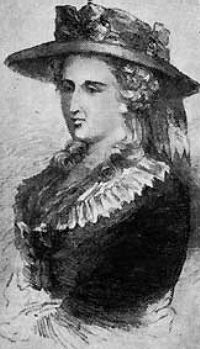 Ann Ward Radcliffe,
The Mysteries of Udolpho
Ann Ward Radcliffe,
The Mysteries of Udolpho
“ Early on the following morning, the travellers set out for Turin. The luxuriant plain, that extends from the feet of the Alps to that magnificent city, was not then, as now, shaded by an avenue of trees nine miles in length; but plantations of olives, mulberry and palms, festooned with vines, mingled with the pastoral scenery, through with the rapid Po, after its descent from the mountains, wandered to meet the humble Doria at Turin. As they advanced towards this city, the Alps, seen at some distance, began to appear in all their awful sublimity ”
by Henry James, Italian Hours (1909)
“ These indeed are not objects of first-rate interest, and with such Turin is rather meagrely furnished. It has no architecture, no churches, no monuments, no romantic street-scenery. It has the great votive temple of the Superga, which stands on a high hilltop above the city, gazing across at Monte Rosa and lifting its own fine dome against the sky with no contemptible art. ”
James Wood, The Nuttall Encyclopædia — P
“ Piedmont, a district of Italy, formerly a principality, ruled by the house of Savoy, surrounded by the Alps, the Apennines, and the river Ticino; occupies the W. end of the great fertile valley of the Po, a hilly region rich in vines and mulberries, and a mountainous tract with forests and grazing land intersected by lovely valleys, which send streams down into the Po; the people are industrious; textile manufactures are extensive, and agriculture is skilful; Turin, the largest town, was the capital of Italy 1859-1865 ”
