Summary

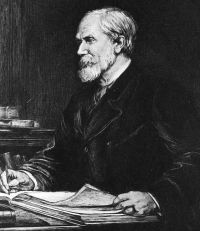
Portrait of Henry Yule Henry Yule Encyclopædia Britannica, Ninth Edition…

Population gathered about the southern front, probably using the material of the old city of Yenking, and the excrescence so formed was, in 1544, enclosed by a wall, and called the “outer city.” It is the same that is usually called by Europeans “the Chinese city.” The ruins of the retrenched northern portion of Kublai’s great rampart are still prominent along their whole extent, so that there is no room for question as to the position or true dimensions of the Cambaluc of the Middle Ages
Source: Wikisource

Portrait of Henry Yule Henry Yule Encyclopædia Britannica, Ninth Edition…

This was the name in common use when the Jesuits entered China towards the end of the 16th century, and began to send home accurate information about China. But it is not so now; the names in ordinary use being King-cheng or King-tu, both signifying “capital.” The restoration of Cambaluc was commenced in 1409. The size of the city was diminished by the retrenchment of nearly one-third at the northern end, which brought the enceinte more nearly to a square form.
Source: Wikisource

Portrait of Henry Yule Henry Yule Encyclopædia Britannica, Ninth Edition…

Tatu continued to be the residence of the emperors till the fall of the Mongol power (1368) . The native dynasty (Ming) which supplanted them established their residence at Nan-king (“South-Court”) , but this proved so inconvenient that the second sovereign of the dynasty reoccupied Tatu, giving it then, for the first time, the name of Pe-king (“North-Court”) .
Source: Wikisource

Get perspective with Kwize: daily news enlightened by great literature