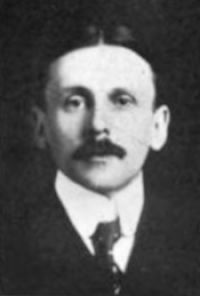
Murray Anthony Potter

Murray Anthony Potter

Summary

Portrait of Murray Anthony Potter Murray Anthony Potter The Harvard Classics Vol. 51 (1914)

If such be your pleasure, you can, with some plausibility, represent the Renaissance as darker than the Middle Ages. Machiavelli, [1] the Medicis, and the Borgias have long been regarded as sin incarnate in odious forms. Making all due allowances for exaggeration and perversion of truth, the Renaissance was not a golden age, and the dramas of horror [2] are something more than the nightmares of a madman. And yet it is a luminous age. The sun has its spots, and the light of the Renaissance is all the more intense because of the blackness of the intermingling shadows.
Source: Wikisource

Portrait of Murray Anthony Potter Murray Anthony Potter The Harvard Classics Vol. 51 (1914)

They would give heed, and to such extremes did many Renaissance men go in their worship of beauty that they prostituted her and debased themselves. The majority remained sound of heart, and though tortured with doubts, and stumbling again and again, they succeeded in making themselves worthy of communion with God. Last of all, the question might be asked : is the Renaissance more than a period of storm and stress, a link between the Middle Ages and Modern Times? Like every age, it is one of transition, but it is also one of glorious achievement.
Source: Wikisource

Portrait of Murray Anthony Potter Murray Anthony Potter The Harvard Classics Vol. 51 (1914)

But much of the darkness of what are more fitly called the Middle Ages is due to the dimness of vision of those who have baptized the period with a forbidding name, and if we called the Renaissance an age of light, is it not because we are dazzled by mere glamour? After all, the Renaissance was the offspring of the Middle Ages, and a child must frequently bear the burdens of its parents.
Source: Wikisource

Get perspective with Kwize: daily news enlightened by great literature