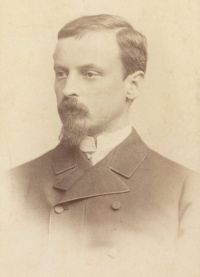
Henryk Sienkiewicz

Henryk Sienkiewicz

Summary

Portrait of Henryk Sienkiewicz Henryk Sienkiewicz In Desert and Wilderness — Chapter 25 (1917)

Uneasiness began to possess both friends. How easy it was to miss each other in that immeasurable expanse, even with a whole caravan; and how much more so two children, who, as they imagined, crept like two little worms somewhere amid heather higher than themselves! Another day passed. Neither fires at night nor tin boxes, with notes in them, fastened on the tufts helped them any. The captain and the doctor at times began to lose hope of ever succeeding in finding the children and, particularly, of finding them alive.
Source: Wikisource

Portrait of Henryk Sienkiewicz Henryk Sienkiewicz In Desert and Wilderness — Chapter 25 (1917)

Now it happened one day that Doctor Clary, shortly after he arose, when approaching the shore, observed between ten and twenty natives of Zanzibar, belonging to the caravan, gazing with upturned faces at the top of a high tree and repeating in a circle:
"Ndege? Akuna ndege? Ndege?" (A bird? Not a bird? A bird?)
The doctor was short-sighted, so he sent to his tent for a field-glass; afterwards he looked through it at the object pointed out by the negroes and great astonishment was reflected upon his countenance.
"Ask the captain to come here," he said.
Source: Wikisource

Portrait of Henryk Sienkiewicz Henryk Sienkiewicz In Desert and Wilderness — Chapter 25 (1917)

Before the negroes reached him the captain appeared in front of the tent, for he was starting on an antelope-hunt.
"Look, Glenn," the doctor said, pointing with his hand upwards.
The captain, in turn, turned his face upwards, shaded his eyes with his hand, and was astonished no less than the doctor.
"A kite," he exclaimed.
"Yes, but the negroes do not fly kites. So where did it come from?"
Source: Wikisource

Get perspective with Kwize: daily news enlightened by great literature