Summary

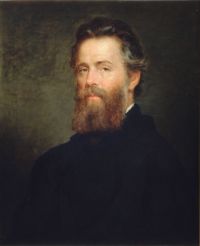
Portrait of Herman Melville Herman Melville Mardi — Volume I/Chapter LXXVIII: Babbalanja Solus (1849)

Oh, how the living triumph over the dead! Marjora! answer. Art thou? or art thou not? I see thee not; I hear thee not; I feel thee not; eyes, ears, hands, are worthless to test thy being; and if thou art, thou art something beyond all human thought to compass. We must have other faculties to know thee by. Why, thou art not even a sightless sound; not the echo of an echo; here are thy bones. Donjalolo, methinks I see thee fallen upon by assassins:—which of thy fathers riseth to the rescue? I see thee dying:—which of them telleth thee what cheer beyond the grave?
Source: Wikisource

Portrait of Herman Melville Herman Melville Mardi — Volume I/Chapter LXXVIII: Babbalanja Solus (1849)

An instinct is no preservative. The fire I shrink from, may consume me.—But dead, and yet alive; alive, yet dead;—thus say the sages of Maramma. But die we then living? Yet if our dead fathers somewhere and somehow live, why not our unborn sons? For backward or forward, eternity is the same; already have we been the nothing we dread to be.
Source: Wikisource

Portrait of Herman Melville Herman Melville Mardi — Volume I/Chapter LXXVIII: Babbalanja Solus (1849)

Nothing abideth; the river of yesterday floweth not to-day; the sun's rising is a setting; living is dying; the very mountains melt; and all revolve:—systems and asteroids; the sun wheels through the zodiac, and the zodiac is a revolution. Ah gods! in all this universal stir, am I to prove one stable thing?
"Grim chiefs in skeletons, avaunt! Ye are but dust; belike the dust of beggars; for on this bed, paupers may lie down with kings, and filch their skulls. This, great Marjora's arm?
Source: Wikisource

Get perspective with Kwize: daily news enlightened by great literature