Summary

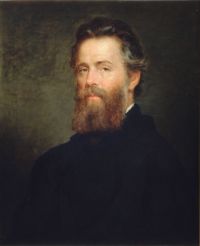
Portrait of Herman Melville Herman Melville Mardi — Volume II/Chapter LI: In Which Azzageddi Seems To Use Babbalanja For A Mouth-Piece (1849)

I say, my lord, our bodies are our betters. A soul so simple, that it prefers evil to good, is lodged in a frame, whose minutest action is full of unsearchable wisdom. Knowing this superiority of theirs, our bodies are inclined to be willful: our beards grow in spite of us; and as every one knows, they sometimes grow on dead men."
"You mortals are alive, then, when you are dead, Babbalanja."
Source: Wikisource

Portrait of Herman Melville Herman Melville Mardi — Volume II/Chapter LI: In Which Azzageddi Seems To Use Babbalanja For A Mouth-Piece (1849)

Plants know nothing of their interiors:—three score years and ten we trundle about ours, and never get a peep at them; plants stand on their stalks:—we stalk on our legs; no plant flourishes over its dead root:—dead in the grave, man lives no longer above ground; plants die without food:—so we. And now for the difference. Plants elegantly inhale nourishment, without looking it up: like lords, they stand still and are served; and though green, never suffer from the colic:—whereas, we mortals must forage all round for our food: we cram our insides
Source: Wikisource

Portrait of Herman Melville Herman Melville Mardi — Volume II/Chapter LI: In Which Azzageddi Seems To Use Babbalanja For A Mouth-Piece (1849)

Without bodies, my lord, we Mardians would be minus our strongest motive-passions, those which, in some way or other, root under our every action. Hence, without bodies, we must be something else than we essentially are. Wherefore, that saying imputed to Alma, and which, by his very followers, is deemed the most hard to believe of all his instructions, and the most at variance with all preconceived notions of immortality, I Babbalanja, account the most reasonable of his doctrinal teachings. It is this;—that at the last day, every man shall rise in the flesh.
Source: Wikisource

Get perspective with Kwize: daily news enlightened by great literature