Summary

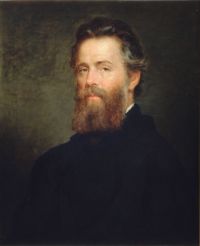
Portrait of Herman Melville Herman Melville Mardi — Volume II/Chapter LXXVI: Some Pleasant… (1849)

ABRAZZA (to Media) —Pray, my lord, is this good gentleman a devil?
MEDIA.—No, my lord; but he's possessed by one. His name is Azzageddi. You may hear more of him. But come, Babbalanja, hast forgotten all about Lombardo? How set he about that great undertaking, his Kortanza?
ABRAZZA (to Media) —Oh, for all the ravings of your Babbalanja, Lombardo took no special pains; hence, deserves small commendation. For, genius must be somewhat like us kings,—calm, content, in consciousness of power. And to Lombardo, the scheme of his Kortanza must have come full-fledged, like an eagle from the sun.
Source: Wikisource

Portrait of Herman Melville Herman Melville Mardi — Volume II/Chapter LXXVI: Some Pleasant… (1849)

Partly so, my literal lord. And as with your own golden scepter, at times upon your royal teeth, indolent tattoos you beat; then, potent, sway it o'er your isle; so, Lombardo. And ere Necessity plunged spur and rowel into him, he knew not his own paces. That churned him into consciousness; and brought ambition, ere then dormant, seething to the top, till he trembled at himself. No mailed hand lifted up against a traveler in woods, can so, appall, as we ourselves. We are full of ghosts and spirits; we are as grave-yards full of buried dead, that start to life before us.
Source: Wikisource

Portrait of Herman Melville Herman Melville Mardi — Volume II/Chapter LXXVI: Some Pleasant… (1849)

BABBALANJA—In ten days, Lombardo had written full fifty folios; he loved huge acres of vellum whereon to expatiate.
MEDIA—What then?
BABBALANJA—He read them over attentively; made a neat package of the whole: and put it into the fire.
ALL—How?
MEDIA—What! these great geniuses writing trash?
ABRAZZA—I thought as much.
BABBALANJA—My lords, they abound in it! more than any other men in Mardi. Genius is full of trash. But genius essays its best to keep it to itself; and giving away its ore, retains the earth; whence, the too frequent wisdom of its works, and folly of its life.
Source: Wikisource

Get perspective with Kwize: daily news enlightened by great literature