Summary

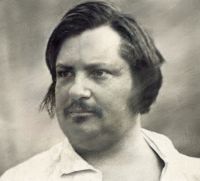
Portrait of Honoré de Balzac Honoré de Balzac Eugénie Grandet — Chapter I

The old cooper, eaten up with ambition, was looking, they said, for a peer of France, to whom an income of three hundred thousand francs would make all the past, present, and future casks of the Grandets acceptable. Others replied that Monsieur and Madame des Grassins were nobles, and exceedingly rich; that Adolphe was a personable young fellow; and that unless the old man had a nephew of the pope at his beck and call, such a suitable alliance ought to satisfy a man who came from nothing,—a man whom Saumur remembered with an adze in his hand, and who had, moreover, worn the bonnet rouge.
Source: Wikisource

Portrait of Honoré de Balzac Honoré de Balzac Eugénie Grandet — Chapter I

Others, however, maintained that Madame des Grassins was more intimate with the women of the house of Grandet than the Cruchots were, and could put into their minds certain ideas which would lead, sooner or later, to success. To this the former retorted that the Abbe Cruchot was the most insinuating man in the world: pit a woman against a monk, and the struggle was even. "It is diamond cut diamond," said a Saumur wit.
Source: Wikisource

Portrait of Honoré de Balzac Honoré de Balzac Eugénie Grandet — Chapter I

You may see a cooper, for instance, sitting in his doorway and twirling his thumbs as he talks with a neighbor. To all appearance he owns nothing more than a few miserable boat-ribs and two or three bundles of laths; but below in the port his teeming wood-yard supplies all the cooperage trade of Anjou. He knows to a plank how many casks are needed if the vintage is good. A hot season makes him rich, a rainy season ruins him; in a single morning puncheons worth eleven francs have been known to drop to six. In this country, as in Touraine, atmospheric vicissitudes control commercial life.
Source: Wikisource

Get perspective with Kwize: daily news enlightened by great literature