Eugénie Grandet

Definition and stakes

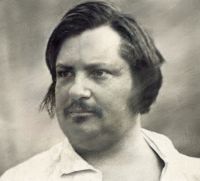
Portrait of Honoré de Balzac Honoré de Balzac Eugénie Grandet (1834)

To feel, to love, to suffer, to devote herself,—is not this the sum of woman's life? Eugenie was to be in all things a woman, except in the one thing that consoles for all. Her happiness, picked up like nails scattered on a wall—to use the fine simile of Bossuet—would never so much as fill even the hollow of her hand. Sorrows are never long in coming; for her they came soon. The day after Charles's departure the house of Monsieur Grandet resumed its ordinary aspect in the eyes of all, except in those of Eugenie, to whom it grew suddenly empty.
Source: Wikisource

Portrait of Honoré de Balzac Honoré de Balzac Eugénie Grandet

Eugenie, not being able to understand the question of her father’s fortune, stopped short in her calculations.
“He didn’t even see me, the darling!” said Nanon, coming back from her errand. “He’s stretched out like a calf on his bed and crying like the Madeleine, and that’s a blessing! What’s the matter with the poor dear young man!”
“Let us go and console him, mamma; if any one knocks, we can come down.”
Madame Grandet was helpless against the sweet persuasive tones of her daughter’s voice. Eugenie was sublime: she had become a woman.
Source: Gutenberg

Portrait of Honoré de Balzac Honoré de Balzac Eugénie Grandet (1834)

Such is the history of Eugenie Grandet, who is in the world but not of it; who, created to be supremely a wife and mother, has neither husband nor children nor family. Lately there has been some question of her marrying again. The Saumur people talk of her and of the Marquis de Froidfond, whose family are beginning to beset the rich widow just as, in former days, the Cruchots laid siege to the rich heiress. Nanon and Cornoiller are, it is said, in the interests of the marquis. Nothing could be more false.
Source: Wikisource

Get perspective with Kwize: daily news enlightened by great literature