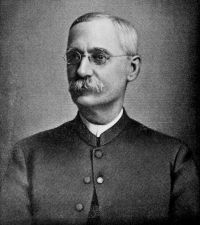
Horace Edwin Hayden

Horace Edwin Hayden

Summary

Portrait of Horace Edwin Hayden Horace Edwin Hayden Southern Historical Society Papers (1880)

The use in warfare of explosive balls, so sensitive as to ignite and burst on striking a substance as soft and yielding as animal flesh (of men or horses) , I consider barbarous and no more to be tolerated by civilized nations than the universally reprobated practice of using poisoned missiles, or of poisoning food or drink to be left in the way of an enemy. Such a practice is inexcusable among any people above the grade of ignorant savages. Neither do I regard the use in war of such explosive balls as of any public advantage, but rather the reverse
Source: Wikisource

Portrait of Horace Edwin Hayden Horace Edwin Hayden Southern Historical Society Papers (1880)

I have a box of these shells in my possession. They are open for examination by any persons who may desire to see them.
This summer the distinguished officer who commanded the 143d regiment of Pennsylvania volunteers, United States army, at the battle of Gettysburg, informed me that during the last day of the battle, he and his men frequently heard, above their heads, amid the whistling of the minnie balls from the Confederate side, sharp, explosive sounds like the snapping of musket caps.
Source: Wikisource

Portrait of Horace Edwin Hayden Horace Edwin Hayden Southern Historical Society Papers (1880)

The following remarkable statement occurs as a note to the account of the battle of Gettysburg, on page 78, volume III, of "The Pictorial History of the Civil War in the United States of America, by Benson J. Lossing, LL. D.":
Many, mostly young men, were maimed in every conceivable way, by every kind of weapon and missile, the most fiendish of which was an explosive and a poisoned bullet, represented in the engraving a little more than half the size of the originals, procured from the battlefield there by the writer.
Source: Wikisource

Get perspective with Kwize: daily news enlightened by great literature