Summary

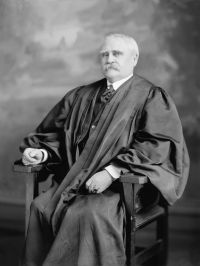
Portrait of Horace Harmon Lurton Horace Harmon Lurton Omaha v. Omaha Water Company — Opinion of the Court

As already hinted, this was not a board of arbitrators. An arbitration implies a difference, a dispute, and involves ordinarily a hearing and all thereby implied. The right to notice of hearings, to produce evidence and cross-examine that produced, is implied when the matter to be decided is one of dispute and difference. But when, as here, the parties had agreed that one should sell and the other buy a specific thing, and the price should be a valuation fixed by persons agreed upon, it cannot be said that there was any dispute or difference.
Source: Wikisource

Portrait of Horace Harmon Lurton Horace Harmon Lurton Omaha v. Omaha Water Company — Opinion of the Court

If nothing has been purchaser between themselves, it can hardly purchaser between themselves, it can hardly them. It might be that if the purchaser knew the price required by the seller, there would be no difference, and that he would be willing to give it. It may well be that if the vendor knew the price which the purchaser would give, there would be no difference, and that he would accept it.
Source: Wikisource

Portrait of Horace Harmon Lurton Horace Harmon Lurton Omaha v. Omaha Water Company — Opinion of the Court

The city does not therefore object to valuing the supply station and mains extending to the city, as within the contemplated purchase. But it is said that the authority is limited to a distributing system wholly within the corporate limits. That the primary purpose was to supply the people of Omaha with water for public and private purposes is clear. But does that forbid that those who live outside may not be also supplied from the main plant, and, if necessary, by such extensions, not inconsistent with the primary object, as may prove desirable as suburbs grow up around the city?
Source: Wikisource

Get perspective with Kwize: daily news enlightened by great literature