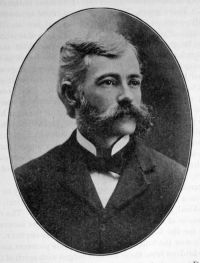
Horace Sumner Lyman

Horace Sumner Lyman

Summary

Portrait of Horace Sumner Lyman Horace Sumner Lyman,  The Pacific Monthly

“ The fishermen are co-operating among themselves, but competing with the capitalistic canners, and thereby have earned their respect.
Competition is no evil, but a necessary element of industry. It seeks only to supply the market with articles made increasingly desirable at a decreasing cost. It does thereby constantly shut off and crowd out inferior or expensive goods, but for these, substitutes better; giving better service at less expense. It is only when the laborer is not able to compete, and has no alternative but starvation, that labor is oppressed.
”
Source: Wikisource

Portrait of Horace Sumner Lyman Horace Sumner Lyman,  The Pacific Monthly

“ The problem of industrial legislation is to give labor equitable rights in the resources of nature, and not permit private, or exclusive ownership, in the materials and natural energies that are required to carry on industry.
If the cannerymen had been legally allowed—and this is not to say a word against them—to own the river itself, and all the fish in it, the fishermen would have had no recourse but strikes and violence to prevent reduction of wages. Where labor is shut up to violence to preserve its part in reward of industry, it will use violence.
”
Source: Wikisource

Portrait of Horace Sumner Lyman Horace Sumner Lyman,  The Pacific Monthly

“ If every laborer, like these Columbia river fishermen, could proceed to work on his own account, and put out a product on the market, and reap his own reward, if wages did not suit him, there could be no oppression.
The industrial sin of the time is the shutting of labor away, mostly through legislative action, or neglect, from opportunity to make use of natural advantages.
”
Source: Wikisource

Get perspective with Kwize: daily news enlightened by great literature