Summary

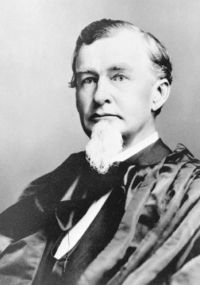
Portrait of Howell Edmunds Jackson Howell Edmunds Jackson Imperial Fire Insurance Company of London v…

The court should have instructed the jury that if the work done by the mechanics increased the hazard while the work was in progress, then the assured would not be entitled to recover, because, when the hazard was increased, and the risk changed, by the acts of the assured, and without the knowledge or consent of the insurer, in that event the contract came to an end by virtue of its own expressed, unambiguous terms.
Source: Wikisource

Portrait of Howell Edmunds Jackson Howell Edmunds Jackson Imperial Fire Insurance Company of London v…

If the insured cannot bring himself within the conditions of the policy, he is not entitled to recover for the loss. The terms of the policy constitute the measure of the insurer's liability, and, in order to recover, the assured must show himself within those terms; and, if it appears that the contract has been terminated by the violation on the part of the assured of its conditions, then there can be no right of recovery. The compliance of the assured with the terms of the contract is a condition precedent to the right of recovery.
Source: Wikisource

Portrait of Howell Edmunds Jackson Howell Edmunds Jackson Imperial Fire Insurance Company of London v…

The condition that the policy should be void and of no effect if 'mechanics are employed in building, altering, or repairing the premises named herein,' without notice to or permission of the insurance company, being a separate and valid stipulation of the parties, its violation by the assured terminated the contract of the insurer, and it could not be thereafter made liable on the contract, without having waived that condition, merely because, in the opinion of the court and the jury, the alterations and repairs of the building did not, in fact, increase the risk.
Source: Wikisource

Get perspective with Kwize: daily news enlightened by great literature