Summary

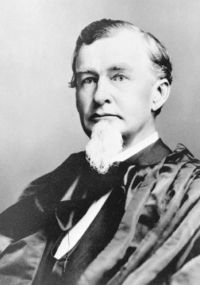
Portrait of Howell Edmunds Jackson Howell Edmunds Jackson North Chicago Rolling-Mill Company v…

Louis Company for the benefit of a stranger, and then be left to either lose its valid claim for damages, or follow its nonresident insolvent debtor into another jurisdiction, in the effort, more or less experimental and expensive, to collect such claim? If the St. Louis Company was the beneficial plaintiff in the judgment at law, or the case stood alone between it and the Chicago Company, there could be little or no doubt that a court of equity would, under the facts stated, afford the latter relief, by way of equitable set-off.
Source: Wikisource

Portrait of Howell Edmunds Jackson Howell Edmunds Jackson North Chicago Rolling-Mill Company v…

Again, it is well established that equity will entertain jurisdiction, and afford relief against the collection of a judgment, where, in justice and good conscience, it ought not to be enforced, as where there is a meritorious, equitable defense thereto, which could not have been set up at law, or which the party was, without fault or negligence, prevented from interposing.
Source: Wikisource

Portrait of Howell Edmunds Jackson Howell Edmunds Jackson North Chicago Rolling-Mill Company v…

The attaching creditor seeks to have himself substituted to the rights of his debtor, as against the garnishee, and by laying his attachment he acquires no superior right to that of his debtor. The right of condemnation must therefore be subject to any such right of set-off or discharge existing at the time of garnishment as would be available to the garnishee if he were sued by the defendant. Any other rule would in many cases work gross injustice, and might be subject to great abuse.
Source: Wikisource

Get perspective with Kwize: daily news enlightened by great literature