Summary

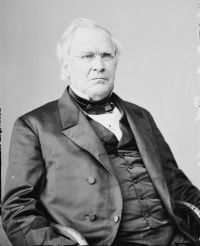
Portrait of Robert Cooper Grier Robert Cooper Grier Deacon v. Oliver — Opinion of the Court

An execution is usually required as precedent to suit in equity.
The attachment was such an execution. Even if no condemnation could have been had under it; yet neither can an equitable interest in chattels or land be sold under a fi. fa. at common law. But the fi. fa. is held to bind them, and a bill lies in equity to sell them.
So here, the attachment was the most appropriate form of execution to bind an interest, in the nature of a credit or chose in action, as preliminary to a bill in equity, to have it applied to the satisfaction of the judgment.
Source: Wikisource

Portrait of Robert Cooper Grier Robert Cooper Grier Deacon v. Oliver — Opinion of the Court

But the act does not define the subject-matter on which the attachment may be laid by any reference to the person in whose hands in may happen to be. The credit is the thing attached; it may be attached in the hands of the plaintiff, or any other person.
May, then, a credit be in the hands of any person but the debtor, who himself directly owes the money to the defendant?
A credit is a right to demand money from some one. It is equivalent to the legal phrase, a chose in action-a thing to be sued for.
Source: Wikisource

Portrait of Robert Cooper Grier Robert Cooper Grier Deacon v. Oliver — Opinion of the Court

If, at the time the attachment was served on him, the claim of Lyde Goodwin had existed as a debt due him by a citizen of Maryland, and Oliver held an equitable transfer either absolute or defeasible, it is abundantly evident that the proper person to be made garnishee in an attachment, would have been the debtor, not the equitable claimant of the debt. He has but an equity or a bare right, but whatever it is, it is his own, and his claim is in hostility both to the plaintiff and defendant in the attachment.
Source: Wikisource

Get perspective with Kwize: daily news enlightened by great literature