Summary

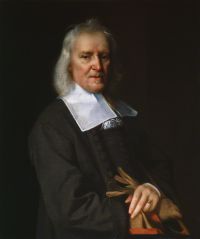
Portrait of Izaak Walton Izaak Walton Waltoniana: Inedited Remains in Verse and Prose of Izaak Walton

But we are now enabled to present those who love his memory with a collection of fugitive pieces, in verse and prose, extending in date of composition over a period of fifty years,—beginning with the Elegy on Donne, in 1633, and terminating only with his death in 1683. All these, however unambitious, are more or less characteristic of the man, and impregnated with the same spirit of genial piety that distinguishes the two well-known books to which they form a supplement.
Walton's devotion to literature must have begun at an early age
Source: Gutenberg

Portrait of Izaak Walton Izaak Walton Waltoniana: Inedited Remains in Verse and Prose of Izaak Walton

It is certain, however, that a family of Chalkhills existed, with whom Walton was closely connected by his marriage with the sister of Bishop Ken. But that an "acquaintant and friend of Edmund Spenser," capable of writing such a poem as Thealma and Clearchus, should have kept his talents so concealed, that in an age of commendatory verses no slightest contemporary record of him exists—is, to say the least, extraordinary.
Source: Gutenberg

Portrait of Izaak Walton Izaak Walton Waltoniana: Inedited Remains in Verse and Prose of Izaak Walton

And, I have also this truth to say of the Author, that he was in his time a man generally known, and as well belov'd; for he was humble, and obliging in his behaviour, a Gentleman, a Scholar, very innocent and prudent: and indeed his whole life was useful, quiet, and virtuous. God send the Story may meet with, or make all Readers like him. I.W. [1] May 7, 1678.
FOOTNOTES [1] The Poem of Thealma and Clearchus was left in an unfinished state: it terminates abruptly with the half line
"Thealma lives"—
Upon which Walton adds
And here the Author dy'd, and I hope the Reader will be sorry.
Source: Gutenberg

Get perspective with Kwize: daily news enlightened by great literature